|
|
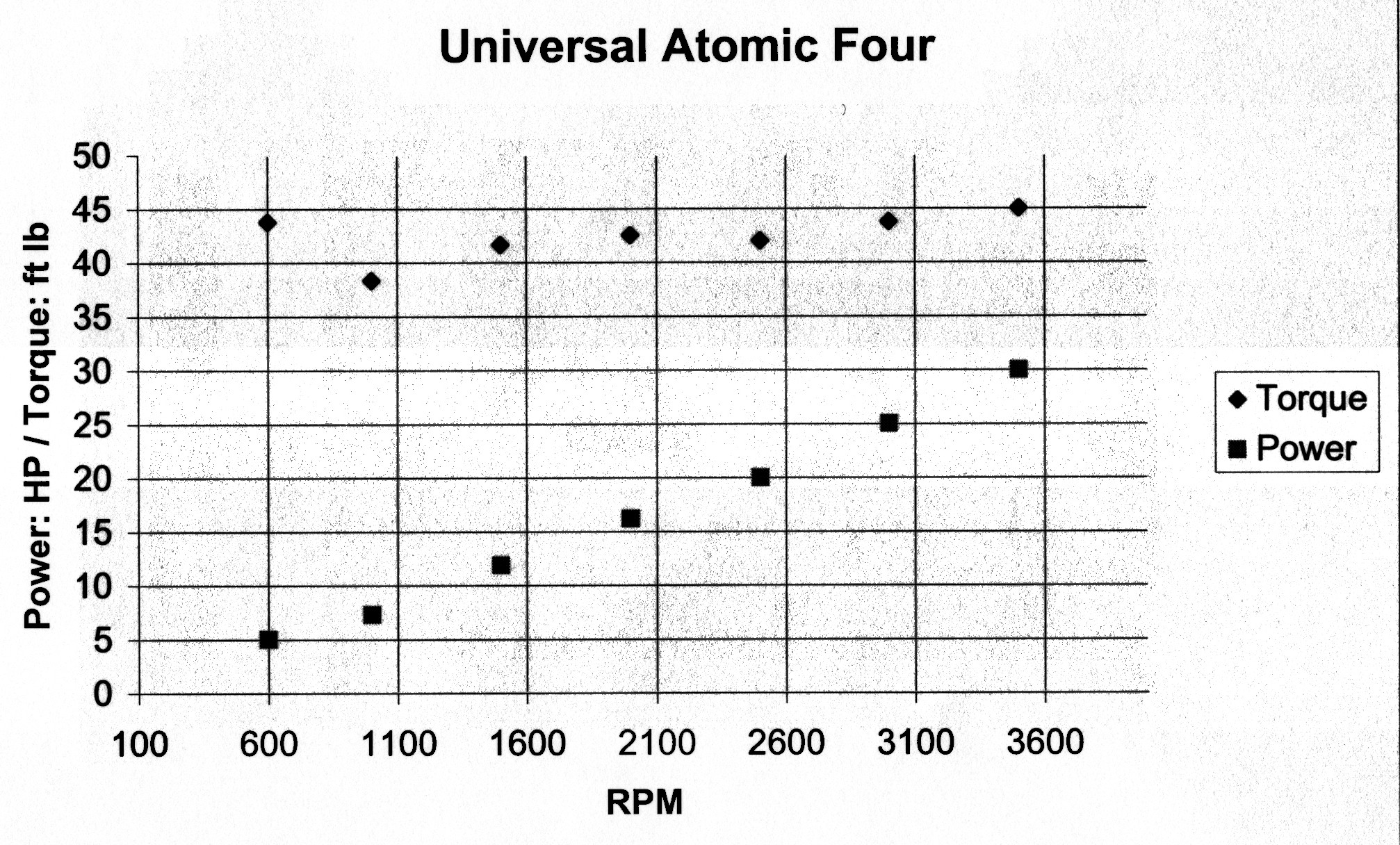
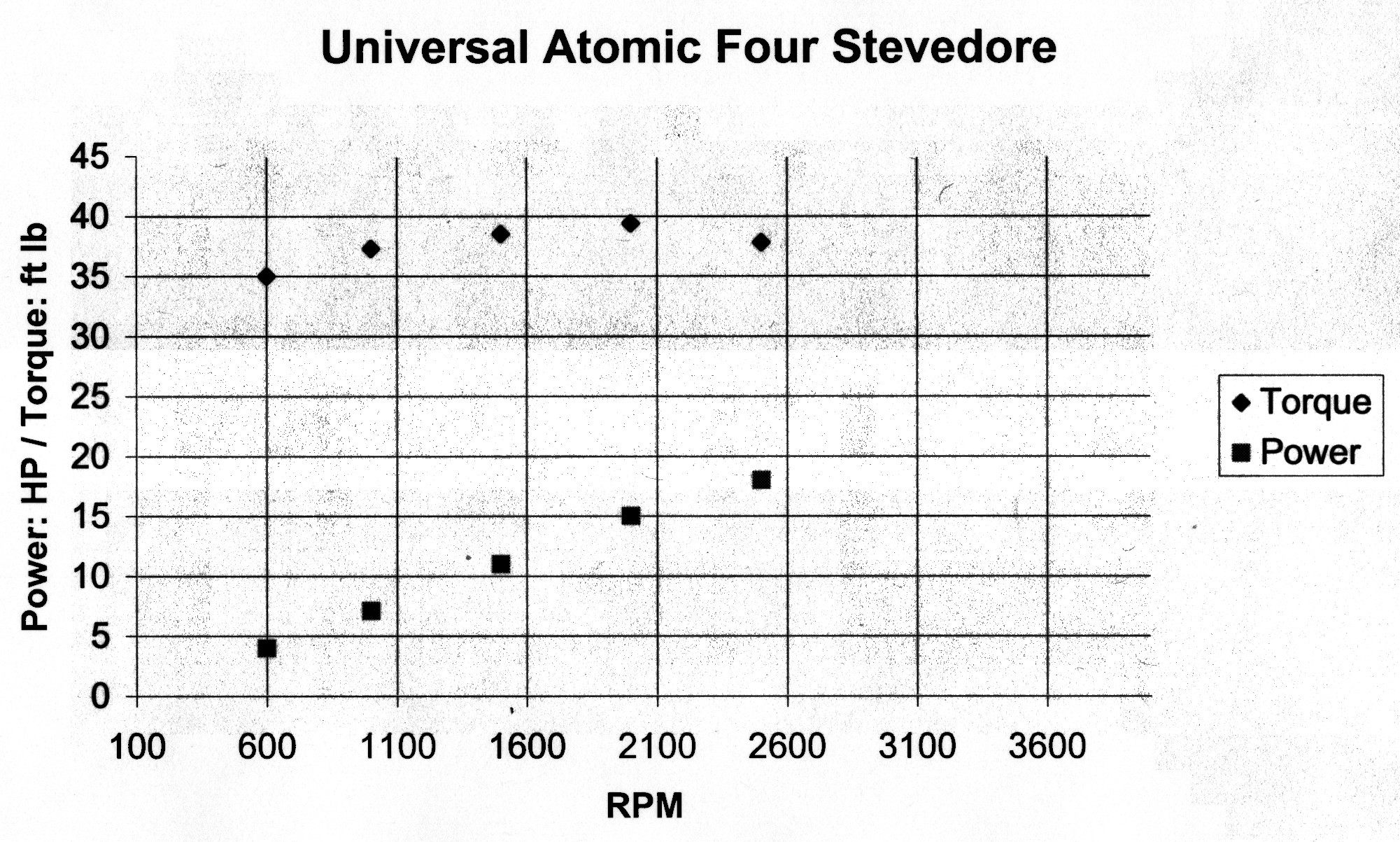
Frequently Asked Questions (FAQ) How do I align my engine? Universal inboard marine engines should be installed so that the engine mounts are securely attached using the correct fasteners, aligned with the propeller shaft to a tolerance of .05 mm (.002 in) per inch of shaft flange diameter, measured at the engine and propeller shaft flange face, with the propeller shaft aligned and centred with the propeller shaft strut cutlass bearing and stern tube. During adjustment any flexible (ie rubber) engine mounts should be extended using pry bars or wedges to bring the engine into the same position it will be when the boat is under power at normal cruising speed. To determine engine mount deflection position under power, measure the position of the engine close to each mount with the engine stopped, and then measure it again under power (you can do this tied to the dock) using a dial gauge or fixed pointer. Excessive deflection of the engine under power may mean the engine mounts are loose or the flexible engine mount material is worn out. When aligning the engine, adjust the alignment with the 2 rear engine mounts and 1 forward mount (for V drive engines adjust 1 rear engine mount and 2 forward mounts), leaving the 4th mount loose until the alignment is correct. Take up the clearance on the 4th mount with the lower adjusting nut or shims. Then tighten all 4 mount top nuts. This will prevent the engine block/pan from being twisted (and possibly cracked) during final tightening of the mount nuts. If the alignment changes when the top nuts are tightened, the 4th mount clearance was adjusted either too much or not enough. Engine mount deflection and engine alignment should be checked once per year, as well as whenever the boat has been lifted from the water, and mounts replaced or tightened and alignment adjusted as required. Always use "shakeproof" lock washers on engine mount nuts. What size propeller should I use? The boat must be fitted with a properly balanced propeller of a pitch and diameter that will allow the engine to reach rated continuous rpm during full throttle / top speed testing in normal conditions with a normal load. Universal / Westerbeke diesel engines, and Atomic Four engines fitted with a reduction gear box, must be able to reach maximum rated engine rpm, while direct drive Atomic Four engines, both direct drive Atomic Four and Atomic Four Stevedore engines (whether fitted with the Stevedore intake manifold restrictor or not), must be able to reach 2,100 rpm. If the engine cannot reach rated rpm the propeller is too large and must be replaced with one with a smaller pitch and/or diameter. The use of a propeller that restricts engine rpm to below specification will create a lugging condition that will cause engine overheating and damage (ie blown head gaskets). 3 blade propellers are usually recommended for cruising boats in areas with strong currents and tides, while 2 blade propellers are usually used on boats primarily used for racing. Both 3 blade and 2 blade propellers can be "parked" with at least 1 blade in a vertical position which will allow it to be shielded by the shaft strut or keel, allowing slightly more speed under sail. Should I install a water separator fuel filter assembly? Many marine engine problems are caused by water condensation in fuel tanks, and water / dirt transferred from marine fuel depot (ie marina) tanks. Clean fuel is just as important to gasoline engines as it is to diesel engines, and a water separator filter/fuel filter should be used for both types of engine. Gasoline engine water separator filters should not be fitted with a glass sediment bowl or bowl drain petcock. Fuel filter elements should be changed at least annually, preferably in the autumn. We recommend the Racor 320R-RAC-02 filter assembly for gasoline engines, and the Racor 500MA-P-10 filter assembly for diesel engines. Primary water separator filters should not use a filter element finer than 10 microns (ie do not use 2 micron elements on the primary filter) because it can cause fuel pump damage. Universal diesel engines also have an engine mounted spin-on type secondary 2 micron or 10 micron filter. The "P" in the 500MA model number specifies Filter Bowl Water Probe Assembly #RK21069, which works in conjunction with Water Detection Warning Module #RK12870 (a dash mounted warning light and buzzer which must be purchased separately) to reduce the need to drain water from the filter bowl every day when the boat is being used. We suggest the 500MA be fitted with Bowl Drain Valve Petcock #RK19492 to facilitate bowl draining when it is necessary. What oil should I use in my Atomic Four marine engine? Type: API rating: Viscosity: Atomic Four Engine Service recommends only the motorcycle oils listed below in order to prevent forward clutch slip while providing maximum engine protection and optimum piston ring break-in. All the oils listed are available in both 10-40 and 20-50 viscosities. We use Castrol Grand Prix 20-50 4-Stroke Motorcycle Oil.
Castrol Grand Prix 4 Stroke Motorcycle Oil (available in 1 litre cans in
Canada) Notes: Never use ANY oil additives. Do not switch brands. Do not overfill. What oil should I use in my Universal diesel marine engine and gas or diesel generator? Type: API rating: Viscosity: Atomic Four Engine Service recommends 15-40 oil with the latest API diesel rating CH-4 be used year-round in all Universal and Westerbeke diesel propulsion engines, and gas / diesel generators. We use Chevron "Delo" 15-40. Notes: Never use ANY oil additives. Do not switch brands. Do not overfill. Should I add supplements to my oil? No. Modern engine oil already has lots of additives, including detergents, dispersants, corrosion inhibitors, antioxidants, viscosity-index improvers, extreme-pressure additives, and 28 other chemicals. Do not add any oil supplements (ie Slick 50, STP, Marvel Mystery Oil, kerosene, diesel fuel, automatic transmission fluid, rotten bananas, etc) to the oil. Oil supplements can damage the engine, and can also cause integral clutch-type transmissions such as the Paragon transmission used in the Atomic Four to slip under full load. If you feel the need to add an oil additive product to the oil to free up suspected stuck rings or valves, try using 5-30 oil and changing it several times after approximately 10 hours of running. You can also buy a can of Engine Flush at an auto parts store and add it to the oil to flush the engine just before changing the oil. Stuck valves are usually caused by cold running or a leaking head gasket or a bad exhaust design allowing water to backflow into the manifold and exhaust ports from the water injection elbow, so before assuming valve problems are oil related, make sure the thermostat is bringing the engine up to the correct temperature: 140° F for raw water cooled engines running in salt water, and 180° F for engines equipped with heat exchangers, and that the head gasket and exhaust riser are in good condition and properly installed. Go to www.chris-longhurst.com/carbibles/ for more information. Should I add supplements to my fuel? No. Modern engine fuel already has lots of additives: N-hexyl and octyl nitrate in diesel fuel, and anti-knock agents, scavengers, phosphorous additives, antioxidants, metal deactivators, surface-active agents, deposit control additives, deicing agents, dyes, octane boosters plus 43 other additives in gasoline. Adding any type of oil to the fuel dumps unnecessary oil in the water with the exhaust in the same way a 2 stroke outboard does. The Champion spark plug company "Spark Plug Handbook" warns "Champion does not recommend the use of fuel additives which leave deposits on the core nose of the spark plug". Under the heading "Splash Deposits" the Champion handbook states "the use of fuel additives, carburetor, and choke cleaners or other agressive solvents before installing new plugs is the most common cause of this condition [splash deposits]", and under the heading "Fuel Additives" it states "red to purple deposits on one side of the core nose are an indication of fuel additives. While many of these deposits are non-conductive and do not contribute to lack of performance, some fuel additives contain octane boosters that leave conductive deposits on the core nose". Diesel secondary (final) fuel filters are so fine that they have been known to plug up with some fuel additives and cause engine failure. Do not add anything to your fuel tank except when you're putting the boat in winter storage, at which time you may want to add a small amount of gas line antifreeze to gasoline and diesel fuel conditioner to diesel fuel. Go to www.chris-longhurst.com/carbibles/ for more information. Atomic Four engines fitted with direct drive marine gears use a ball bearing with a "Z" designation for the rear thrust bearing. Can I use a regular ball bearing without the shield? The Z designation in the bearing model number means the bearing has a shield on one side of the race. Shields are non-contact metal or plastic covers which allow for high speed operation by restricting (not stopping) the oil spray in the gearbox from flooding the bearing. They also help keep large bits of dirt and metal from getting into the bearing. The Atomic Four rear thrust bearing is also fitted with a shield to restrict (not stop) oil flow to the output shaft oil seal which is located adjacent to the bearing. Fitting a bearing without a shield allows the full volume of oil spray to reach the bearing and seal, which can cause the bearing to receive too much oil and the rear flange seal to leak. The original bearing should be installed with the shield facing the front of the engine. Replacement bearings with shields on both sides can be installed with both shields left in place. What is a rebuilt engine? A rebuilt engine is an engine that has had most of the larger lumps of rust scraped off with a paint scraper, some of the dirt and salt washed off with a garden hose, the crack in the cylinder head patched with JB Weld, everything (including the spark plug leads and flame arrester air intake ) painted any old colour with left-over cans of house paint, the old oil topped up with a mixture of Marvel Mystery Oil and STP, fitted with lawn mower spark plugs and 4 foot spark plug wires from an old V8 Chevrolet, a cheap gate valve installed in the thermostat bypass hose, initially started with a spray can of starting fluid after sitting outside with a tarp over it for several years, and advertised as "...completely rebuilt Universal engine, fresh-water cooled, like new, 2 year warranty, see it running, call Midnight Marine Supply - pager 999-9999"... No, actually a rebuilt engine is an engine that has been completely disassembled, professionally stripped in industrial acid and hot tanks to remove paint, oil, dirt, cooling system / water jacket deposits, and then measured, machined, and reassembled with new parts so that all clearances are within the manufacturer's tolerances, and all normal wear parts such as seals, bearings, gaskets, filters, hoses have been replaced. At a minimum, rebuilt engines should have the valves and valve seats ground using valve and seat grinding machines (not grinding paste), the cylinder bore ridge removed, the cylinder bore honed to a cross-hatch finish, the piston rings replaced, and the crankshaft bearings replaced. The engine cylinders should be rebored or sleeved and new pistons fitted if the cylinder bore is worn beyond manufacturer's tolerances. My friend says when an Atomic Four engine is being rebuilt it should always be bored to the next oversize and fitted with new oversize pistons. Is he right? No. Pistons for Atomic Four engines are expensive, and since most engines were raw water cooled and all engines are now at least 20 years old, corrosion in the water jackets may have reduced the thickness of the cylinder wall. Boring the cylinders oversize may reach a small pinhole caused by corrosion to cause a coolant leak into the cylinder. If the cylinder bore is worn beyond the limit for diameter, taper, or ovality, it is usually better to install cylinder liners, which will retain the original cylinder wall thickness and may allow the use of the old pistons (if the ring lands are still in good condition) because the new liners can be sized to compensate for any piston skirt wear, and thus return the cylinder/piston clearance to the original specification. In most cases used pistons can be re-installed if the ring lands are in good condition and the cylinder/piston clearance is less than .005" as long as new rings are fitted and the cylinders are properly ridge-reamed and deglazed. My friend works in an automotive machine shop, and she says that when any engine, including an Atomic Four engine, is being rebuilt the pistons should be installed with the arrow mark and "-> Front" stamp on the piston crown pointing to the front of the engine... the front on an Atomic Four being defined as the flywheel end, not the marine gear/propeller shaft coupling end. Is she right? No. It is common for automotive engine rebuilders to install Atomic Four pistons facing in the wrong direction, because they assume the "-> Front" mark on the top of the original OEM pistons means they should be installed facing what would be the front in an automotive engine, when in fact the "-> Front" mark should face towards the marine gear / propeller shaft end so that the vertical expansion slot and piston pin offset are in the right position. Installing the pistons backwards causes mysterious oil consumption problems. My friend says when an Atomic Four engine is being rebuilt the camshaft bushings must always be replaced. Is he right? No. In order to properly clean an engine for rebuilding it must be cleaned in an industrial "hot tank", which requires that the camshaft bushings be removed (to prevent them from being damaged by the caustic cleaning solution) and then reinstalled and line reamed as part of the assembly process. Atomic Four camshaft bushings wear very little unless the engine has experienced a lubrication failure at some time in the past, and because they are expensive it is considered cost-effective to re-install them even when the engine is being completely rebuilt and all other bearings are being replaced. Do I need a tachometer? No, a tachometer is not essential, although it is a popular accessory. A tachometer should be used initially to verify the correct propeller has been fitted, but once that is done engine speed is limited by maximum boat speed, and is directly linked to the boat speed shown by the boat knot meter, so a tachometer is not essential. Tachometers are used in land vehicles to determine the correct engine rpm for gear shifting, however since most marine engines have only 1 forward gear, the only use for a tachometer is to check engine performance and/or hull and propeller condition. Engine speed may be higher than normal in case of transmission clutch slip, a sheared propeller shaft flange or propeller key, a damaged diesel engine governor, or a damaged propeller, however excessive engine speed will quickly be recognized by a marked increase in engine noise and vibration. I got the UAP-NAPA numbers for Atomic Four tune-up parts from a US news group on the internet, but my local UAP-NAPA auto parts store says they can't use them. Why not? Canadian UAP Napa part numbers are different from the American numbers given on American news groups and Atomic Four web sites. You don't need the numbers for most parts. Just tell the counter sales representative at any good auto parts store that you want parts for a Universal (Westerbeke) Atomic Four marine engine, model UJ, and they'll look them up (or order them from Atomic Four Engine Service). How do I pick the right gauge and gauge sender? Most electrical gauges except voltmeters and ammeters work in tandem with a variable resistance gauge sender. In order for the gauge to read correctly, the sender has to be matched to the gauge. There is no industry standard gauge sender resistance, and each manufacturer uses their own specification and design, so gauges and gauge senders from different manufactures usually are not compatible. As well, each manufacturer makes different resistance gauge senders for boats with single station controls and for boats with dual station controls (1 sender connected to 2 gauges) which cannot be interchanged. The wrong sender can instantly destroy a new gauge, or fail to warn the operator of an engine problem. For those reasons it is recommended that oil pressure, water temperature, exhaust temperature, manifold vacuum, fuel pressure, water pressure, etc. gauge senders be replaced at the same time gauges are replaced. Cheap gauges usually work OK for a while, but are usually are not properly designed to withstand the vibration and corrosion inherent in marine use and break just when they're needed. The flimsy mounting systems on cheap gauges usually cause more lost time than was saved in not buying a quality product too, as well as causing a lot of problems with loose gauges and wires. For those reasons, and more, we only sell Stewart Warner (SW) marine gauges and senders, because we find that their initial higher cost is more than compensated for by their faster installation, reliability and accuracy. Are Atomic Four engines dangerous because they use gasoline for fuel? No. Gasoline vapour is highly inflammable and can cause an explosion if it ignites in a closed space like the engine compartment or cabin of a sailboat, however if the fuel system is properly installed, the engine and fuel system receive regular maintenance, and the operator follows Canadian Coast Guard safety procedures when refueling, gasoline causes few problems. We are only aware of one Atomic Four gasoline vapour explosion which caused a fatality (in Montreal several years ago), despite the fact that there are thousands of Atomic Four equipped sailboats still in use. There are also thousands of inboard/outboard motor boats fitted with gasoline engines in use too (ie Mercruiser), and although explosions and fires are not common, they happen frequently enough to keep Atomic Four owners nervous. The propane gas used on many boats for cooking and heating is similar to gasoline. Both gasoline and propane vapours are explosive and heavier than air, and so collect in the lowest part of the boat, which is usually where the engine is located. The Canadian Coast Guard Fire Safety Pamphlet suggests that inflammable vapours are usually ignited during starting by the spark created when the starter bendix gear hits the flywheel ring gear, so even though diesel engines do not have an ignition system which creates a spark like those used on gasoline engines, diesel powered boats fitted with defective propane systems are just as susceptible to an explosion during starting as gasoline powered boats with a defective fuel system. Gasoline engines like the Atomic Four are perfect for coastal cruising because they are smooth, quiet, and easy to maintain. They're also free of the nausea inducing smell of diesel fuel (important if there are children on board) and it's easy to find fuel because gasoline is a standard fuel everywhere. For off-shore cruising the diesel engine is the best choice because of it's range and reliability (if it's properly maintained). What is the right way to hire an marine engine repair technician/mechanic? Engine problems/failures are usually the result of a poor preventive maintenance program, and quite often occur to engines which have not had a major tune-up / inspection in years. Before spending a lot of time and money diagnosing one mysterious problem after another, make sure the engine has had a recent major inspection/tune-up/service as per the engine service manual preventive maintenance program... and if it hasn't, perform one right away. When a mechanic is being contracted to work on your boat ask for proof of mechanic's license, liability insurance, and workers' compensation board registration before letting he / she on board. Get a written quotation for the work you want done. Clarify the tax status of the mechanic, and what taxes you will be paying. If the mechanic offers to work for cash to avoid any tax record, remember that a person who offers to make an arrangement to avoid paying provincial and / or federal tax is obviously not honest, and will be just as quick to steal from you as they are to steal from the government. Without a receipt for the work there is no tax record, but there is also no record of the work being done in the event of legal or warranty issues. Check to make sure the mechanic has a full set of professional tools... cheap, poorly made tools are the mark of an amateur. Make sure the mechanic fills out a work order form with your written instructions recorded on it, and that he/she understands that all the parts replaced must be retained for your inspection. Do not talk to the mechanic while he/she is working on your engine except to ask questions regarding the condition of the motor and point out components or problems you would like the mechanic to inspect/repair. Do not ask to borrow tools or read manuals while the work is in progress. Before the mechanic starts work remove articles blocking access to the interior of lockers or the engine compartment. Be ready to pay the amount owing as soon as the work is done. Some repair shops
have a sign on the wall of the shop which attempts to give
customers guidelines about dealing with mechanics, using a bit of
humour to get the point across. Usually they read something like
this: Is it a good idea to convert my raw water cooled engine to fresh water cooling by fitting a heat exchanger? Yes. The cast-in water jackets in the cylinder block, cylinder head, and exhaust manifold of raw water cooled engines run in salt water are gradually being corroded by the salt water even when the engine is stopped, and plugged by the minerals and salts precipitated out of the hot water as the engine is run. Usually the first problem that occurs is overheating because the partially plugged water jackets restrict the flow of cooling water, and then later the engine block, cylinder head, and exhaust manifold begin to corrode through until they are so weak small leaks or cracks develop. Although cylinder heads and exhaust manifolds can be replaced, it is very expensive to replace the engine block itself (Atomic Four engine blocks are no longer available). The cost of all the components necessary to convert an engine to fresh water cooling is approximately $900, and although the conversion is expensive, it is one of the few modifications you can make to your engine that will actually increase the value of the boat, since it is quite common to see a boat with a fresh water cooled engine advertised at $500 to $1,000 more than the same model/year/condition boat with a raw water cooled engine. When a raw water cooled engine is converted to fresh water cooling, the existing water pump (usually driven directly off the engine from an engine auxiliary drive) is usually used as the engine coolant pump to pump the water/antifreeze coolant through the engine, to the heat exchanger, and back to the engine. 2 types of heat exchanger can be used, a horizontal engine mounted heat exchanger mounted over the exhaust manifold or at the rear of the engine over the marine gear, or a vertical remote heat exchanger mounted on an adjacent bulkhead. Universal diesel engines after the Model 5416 were equipped with fresh water cooling as standard equipment, with the sea water pump driven by a power take-off on the front of the engine. The engine coolant pump on these models is a centrifugal belt driven automotive type water pump. Universal Atomic Four engines were available with an optional fresh water cooling system which used a horizontal heat exchanger mounted over the exhaust manifold and a rubber impellor sea water pump mounted over the starter and driven by a belt from a pulley on a power take-off assembly mounted on the front of the flywheel. Aftermarket heat exchanger kits mount the sea water pump in various locations: over the starter in the same configuration as the OEM system, over the alternator and driven by a longer alternator belt which also still drives the alternator, directly off the front of the engine using a rubber cush drive assembly, and an electric pump mounted in a convenient location near the engine or heat exchanger and used as an engine coolant pump so the original rubber impellor pump can be used as the sea water pump (electric pumps have a hard impellor which must only be used with clean coolant... and because they are not fitted with a rubber impellor they are not self-priming, which is a requirement for any sea water pump. We recommend the OEM factory sea water pump configuration, which is a sea water pump mounted over the starter and driven by a belt running off a PTO mounted on the end of the crankshaft. This configuration requires 3" clearance in front of the engine flywheel cover, which in many cases can be obtained by cutting a bit out of the engine cover, or remounting the engine cover/cabin stairs slightly forward. The factory installation also had a horizontal heat exchanger mounted over the manifold, however some smaller sailboats do not have room for this and a horizontal or vertical heat exchanger must be mounted on an adjacent bulkhead. The OEM sea water pump was a Sherwood R30G...we use a similar pump... a Jabsco, because the Jabsco is cheaper, easier to get parts for, and easier to service. This arrangement is much superior to any other configuration except direct mounting the sea water pump on the end of the crankshaft (which requires space for the pump and rubber cush drive... about 8"... usually only available on engines fitted with V drives where the engine faces the stern) because it allows for easy access to the pump, doesn't require that the stock alternator belt carry the extra load of a water pump (and therefore allows the stock 35 amp alternator to be replaced with a higher output alternator without increasing the belt width (there is limited clearance for a pulley larger than the stock auxiliary drive pulley... and 90 amps is the limit for the stock belt). If you order a fresh-water cooling system installed during an engine rebuild we will mount the heat exchanger on the engine in the OEM configuration (longer manifold studs are fitted to all rebuilt engines to allow for heat exchanger mounting). If you find that the engine cannot be installed with the heat exchanger in that position, it is a simple matter to remove it from the engine and install it on an adjacent bulkhead (a couple of longer coolant hoses may be required... use automotive heater hose available from any auto parts store). How do I adjust the ignition timing on an Atomic Four engine? The ignition timing on an Atomic Four engine can be adjusted in several ways, but no matter which method is used, before the timing is adjusted the distributor should be serviced to make sure the distributor shaft bushings are lubricated with light oil (a few drops of oil on the little piece of felt under the rotor) and not worn beyond specification, the centrifugal ignition advance is properly lubricated and working smoothly, and the contact breaker (points) gap is adjusted to specification using a feeler gauge, or a dwell meter if one is available. Once this is done the engine can be timed. Static timing can be carried out by turning the crankshaft so the piston for #1 cylinder is at the very top of its stroke (TDC) with both valves closed (firing #1 cylinder), the distributor rotor is pointing at the distributor terminal for #1 spark plug, and the distributor points are just beginning to separate. You can connect a battery powered light or buzzer across the points to determine exactly when they open. When #1 cylinder is at the top of its stroke the split pin in the front of the crankshaft will be pointing straight up and down. Dynamic timing can be carried out by either tying the boat firmly to the dock or taking it out an area where it can be run at top speed for several minutes, connecting a tachometer to the engine, slightly loosening the distributor clamp screw, opening the throttle to get maximum engine speed, gradually rotating the distributor back and forth until the engine is running at the highest rpm possible, and then retightening the distributor clamp screw. At full speed the engine should reach at least 2,100 rpm (if it can't, see "What size propeller should I use?" above). How do I adjust the carburetor on an Atomic Four engine? Early model Atomic Four engines were fitted with a cast iron Zenith 61 carburetor with 2 adjustment screws, one for the high speed main jet, and another one for the low speed idle jet. Atomic Four engines after 1968 were fitted with an aluminum alloy Zenith 68 carburetor with a fixed high speed main jet (some Zenith 68 carburetors have had adjustable main jets installed), but the same adjustable low speed idle jet as the Zenith 61. Assuming the flame arrester is not partially blocked by dirt and oil, and the carburetor is clean and in good condition with the float level set properly, the proper procedure is as follows: Carburetors with fixed high speed main jets should have the main jet removed and checked to see what jet number it is. The jet number is stamped in very tiny numbers on the face of the jet. If it is not a #21 main jet, it should be replaced with one. To adjust the idle mixture screw, initially adjust the idle mixture screw (the upper adjustable jet with the slot for a screwdriver) clockwise (in) until it bottoms lightly, and then out 1 turn. Connect a tach to the engine, start the engine, run the engine in gear until it is fully warmed up, then close the throttle, leave the engine in forward gear, and adjust the carburetor idle speed screw (the screw on the carburetor throttle arm that controls the throttle stop) until the engine is idling at 700 rpm, turn the idle mixture screw slowly out until the rpm drops noticeably, and then in again until the fastest idle speed is obtained. Readjust the idle stop screw to again set the idle speed at 700 rpm. Repeat the idle mixture adjustment again. Carburetors with adjustable high speed main jets should be initially adjusted by turning the main jet adjusting screw (the lower adjustable jet with the little cross on the adjustment screw) clockwise (in) until it bottoms lightly, and counter-clockwise (out) 3 turns, and the idle mixture screw (the upper adjustable jet with the slot for a screwdriver) clockwise (in) until it bottoms lightly, and then out 1 turn. Connect a tach to the engine, start the engine, and with the boat running at top speed in forward gear (or tied to the dock) slowly turn the high speed mixture screw clockwise (in) until maximum rpm is obtained on the tachometer and then counter-clockwise (out) about 1/8 of a turn until the rpm just starts to drop. Close the throttle, leave the engine in forward gear, and adjust the carburetor idle speed screw (the screw on the carburetor throttle arm that controls the throttle stop) until the engine is idling at 700 rpm, turn the idle mixture screw slowly out until the rpm drops noticeably, and then in again until the fastest idle speed is obtained. Readjust the idle stop screw to again set the idle speed at 700 rpm. Because the idle mixture setting has an effect on the main jet setting, repeat the main jet adjustment, and then the idle mixture adjustment 2 more times. The rationale for setting the idle speed at 700 rpm in forward gear is to ensure the engine is idling fast enough to prevent stalling or erratic running when docking. An engine speed of 700 rpm in gear will also automatically increase to about 800 rpm when the transmission is shifted to neutral, which is high enough to allow the alternator to continue charging the battery. Some people say the Atomic Four takes 2 head gaskets, and some say it only takes 1. Who is right? Both are right. The original Atomic Four head gasket was a single thick metal (copper?) gasket. Later the specification was changed to 2 thin composition head gaskets (Universal #23776), until Westerbeke released a new graphite gasket (Westerbeke/Universal #200452) in 1996. The technical bulletin released with the new gasket specifies only 1 of the new gaskets is required, however the manufacturer of the gaskets, Victor Gasket, specifies that 2 of the gaskets are to be used, as do several American Atomic Four specialists (ie Don Moyer). Our tests suggest that 1 graphite gasket works fine, however 2 gaskets probably work well when the cylinder head gasket surface has been machined several times because using 2 gaskets helps lower the compression ratio slightly, which is a good thing in flathead marine engines like the Atomic Four. We recommend always using 2 gaskets when the cylinders have been bored oversize (to either .010" or .020"), or when the head has been machined to eliminate any warp. Refer to Universal Service Bulletin 223 for more information. There are a lot of accessories available for the Atomic Four. Which ones should I buy? Many people will spend a lot of money on cheaply made accessories for their boat and marine engine, but skimp on basic maintenance and regular overhauls. We recommend purchasing a heat exchanger and suggest the Indigo Electronics PCV valve kit is a good short-term fix for an engine that needs a ring job and is smoking up the cabin, but don't recommend an accessory oil filter, an electronic ignition, or an adjustable thermostat bypass valve. Accessory oil filters are not full-flow filters which filter all the oil before it is pumped to the bearings like the type used on cars, but are bypass filters which filter a small portion of the oil at a time. Changing the oil regularly achieves the same thing, without the possibility of the external oil lines to the accessory oil filter breaking or leaking, and causing massive engine damage. Electronic ignition is not required on a slow-running engine like the Atomic Four, since the standard points and condenser can easily produce enough voltage to fire the spark plugs at any speed and load. As well, since the distributor cap must be removed on a seasonal basis for lubrication of the shaft and advance mechanism, it is a simple matter to install a new set of points and a condenser at the same time. An adjustable valve installed in the thermostat bypass hose makes the Atomic Four have that "vintage" engine look, but is completely unnecessary if a functioning thermostat of the correct temperature rating to suit the engine is fitted to a properly tuned engine that has reasonably clean water jackets, a properly functioning water pump, and (in the case of a post 1968 Atomic Four) a thermostat housing with a bypass port boss which is in good condition. If there is a need to restrict the bypass hose with an adjustable valve to prevent overheating, the engine and/or the thermostat or thermostat housing should be repaired/replaced. How should I prepare my Universal engine for below freezing temperatures? Boats sink on the first warm day of spring because the owner made 2 mistakes at the same time. He/she failed to close the engine sea water through-hull sea-cock when the boat was left for the winter, and water was allowed to freeze in the sea-water side of the engine cooling system, which ripped a section of the sea-water hose or cracked an engine cooling system component. Once the ice melted it allowed sea-water to flow into the boat through the open valve and the damaged hose or component. Remembering to close the sea-cock but failing to properly freeze-proof the engine will likely mean only massive engine damage and not a boat full of cold water too. If you live in a place where there is any chance the temperature could go below freezing during the winter, you need to freeze-proof your engine before winter weather arrives to make sure the engine and components are not damaged by freezing temperatures. There are 3 ways to ensure water can't freeze in the cooling system and crack or distort engine components. You can drain all the water out of the cooling system so there isn't any water to freeze, you can circulate antifreeze through the cooling system so the water in it can't freeze, or you can use heaters to keep the engine and cooling water system warm enough so they don't freeze. Draining: Even if drains can be opened without snapping off a seized drain plug, they frequently are hard to get at, and they quite often get plugged up with bits of rust and dirt which stop the flow of water when they are being drained, giving the impression the component is empty when it is not. If water is not completely drained from every section of the cooling system it can cause freezing damage in one or more individual sections which may not be evident until years later when the component fails. Adding antifreeze: The optimum solution for maximum engine antifreeze protection (good to -60C) is 60% ethylene glycol antifreeze and 40% water. In order to ensure an engine cooling system is properly protected the antifreeze solution must be circulated to every part of the engine water jackets, heat exchanger, water lock exhaust or water jacketed exhaust pipe, and sea-water intake valve, strainer, and hoses. Because it is possible for the antifreeze to reach only some of the engine water jackets unless the engine is fully warmed up and the thermostat has opened, it is necessary to rig up a system to recirculate the antifreeze solution through the engine while the engine is running while the engine grows hot enough for the thermostat to open, or to remove the thermostat before circulating the antifreeze. Heaters: Heaters work well, as long as they are capable of maintaining the engine, engine coolant hoses, exhaust system, and through-hull valve at a temperature higher than freezing, and as long as nobody pulls the plug or causes a power failure. In latitudes north of Florida using a light bulb for a heater is asking for trouble, since the light bulb doesn't put off enough heat to prevent freezing damage when temperatures start to go below -10 C. If a heater is going to be used, make sure it is connected to a temperature switch so it will turn on automatically when the temperature drops close to freezing, and that it can actually keep the engine and coolant/exhaust system warm. Ensure that the power supply is very reliable, and that a backup heater is available. Should I carry a spare parts kit on my boat for my engine? Yes, even if you have no intention to work on your engine, you'll have the right parts available for the mechanic you hire to do it when you're away from home. The Universal Emergency Spares Kit
"A" is ordered by model in order to ensure it is supplied with the
right parts, and is available for all Universal Atomic Four, Universal, and
Westerbeke diesels. It comes in a waterproof plastic box. The diesel kit contains: The Atomic Four kit is similar. In order to save a bit of money most people make their own kit by assembling good used parts and some new ones. I recommend spare assemblies where possible, not just a bunch of parts, since the correct tools to rebuild assemblies are not always available (ie vice, press, parts washer, etc). On my own boat (Hughes Northstar 38
fitted with a reduction box, fresh-water-cooled Atomic Four) I carry: A friend told me that Atomic Four engines sometimes have erratic oil pressure, and there are several ways to fix the problem. What is he talking about? Erratic Atomic Four oil pressure is a problem caused by Universal's change of the adjustable oil pressure regulating valve internal parts to a spring and 3/8" ball from a spring and pencil-shaped plunger around 1965 - 67. The 3/8" (.375") ball was not as good at controlling the oil pressure as the old spring and pencil-shaped plunger so they started using a larger 7/16" (.438") ball around 1972. This still didn't always work, and so they released a retrofit kit which was actually the old spring and pencil-shaped plunger. The kit was accompanied by a service bulletin titled "Atomic Four - Installing Oil Pressure Plunger Kit #256575" which is in the Atomic Four Parts Manual on page 98A/B and details a procedure called "seating plunger or ball" which can be used to improve the performance of the existing ball or when a pencil-shaped plunger is installed. We don't follow this procedure ourselves, and we don't find replacing the ball with an plunger necessary... instead we use a special tool to cut the seat to obtain a new smooth surface at a slightly different angle, and then we fit a new 7/16" ball. Dangerously high oil pressure (ie over 60 psi) when the engine is first started in cold weather means the oil is so thick that the oil pressure relief valve cannot handle it, and the oil should be replaced with a lower viscosity type. Once you've got the ball or plunger installed and seated, adjust the oil pressure to 35 psi at cruise speed rpm with the engine hot. A friend told me that there is no difference in operating an Atomic Four engine and a diesel marine engine, and top speed on boats fitted with either type of engine is obtained by moving the throttle lever all the way to full open and leaving it there. Is he right? No. Unlike diesel marine engines the Atomic Four does not have a governor, and so the operator has to set the throttle manually (and keep adjusting it) according to the forces acting on the boat (ie head winds) at a setting which gives a maximum of about 90% maximum boat speed, (assuming the propeller is the correct size). Since top speed is determined by hull waterline length, and no amount of horsepower can get the boat past it, all any extra throttle does is overload (lug) the engine. To determine the correct throttle setting for maximum cruising speed, open the throttle wide open for a few minutes and record the boat speed from the knot meter (or GPS). Then after that use only enough throttle to run at about 90% of the top speed obtained with wide-open throttle. For example if the maximum speed of the boat is 7 kn, then open the throttle only far enough to give a cruise speed of around 6 kn. A friend told me that low engine operating temperature is a sign of a defective thermostat. Is he right? Sometimes it is. Low engine coolant temperature which persists after the engine has been run under load for an appreciable length of time means either a missing thermostat, a defective gauge/sender, or (in cold water) a sticky or poorly sealing thermostat. You can check the actual water temperature by holding a portable surface thermometer against one of the middle cylinder head studs. It will read the real cylinder head water temperature, which is the temperature the gauge should read if the gauge and sender are properly calibrated and working correctly. The large single spring fitted to the new Atomic Four thermostat supplied by Westerbeke has less pressure than the 3 small springs used on the OEM Holley thermostat originally fitted on engines made after 1968. If there is any restriction in the bypass line and/or a higher pressure Oberdorfer M7 (full cam) water pump has been fitted, the pressure developed by the water pump will actually overcome the force of the spring and open the thermostat slightly when the engine is cold. This can cause the engine to take longer than usual to warm up to operating temperature, as well as causing engines being operated in very cold water to run colder than the rated thermostat temperature. A friend told me that Atomic Four thermostats are a rip-off because they cost $117.95 (about $US80), and I can get one much cheaper by installing a valve in the bypass line and leaving out the thermostat... or installing the valve and also installing a Mercruiser thermostat... or installing a Volvo marine engine thermostat with a spacer and longer studs. The thermostat for my Chevy pick-up truck only cost $10... why are Atomic Four thermostats and marine engine parts in general so expensive? Everything is relative. Atomic Four thermostats are expensive when compared to a Chevy pick-up truck thermostat, but pretty cheap when compared with the thermostat for a Formula 1 racing car... and there are reasons they're more expensive: they're stainless steel, they're specially made in small quantities just for the Atomic Four... they don't fit anything else, they're a different design (dual function... simultaneous head outlet and bypass port control) than a (single function) Chevy thermostat, and they're only sold by dealers, who have to stock them for long periods of time before selling one because demand is so low... the original Holley thermostat fitted to the Atomic Four seems to last forever. As a general rule, people who complain about the price of Atomic Four thermostats also complain about the cost of everything on their boat ad nausea... ("marine parts are just automotive parts at twice the cost, quack, quack, etc") and are convinced there is a plot by boat manufacturers, marine service shops, and marine mechanics to rip them off by overcharging for mechanical repairs and parts. In most cases they simply cannot afford to own a boat, and they need to realize that... nobody is ripping them off, they're just over their cost threshold. How do I measure a used crankshaft to make sure it will fit my engine? A crank or rod is more likely to break if the engine is over-revved in neutral rather than if the prop is too big; ie the boat is running in neutral and the throttle cable breaks or jams (or somebody steps on the throttle lever... which promptly breaks off in the wide-open position!), so the carb goes to full throttle and the engine tries to imitate an out-of-control chainsaw. If you're checking a bunch of used cranks to see if you can find a good one, you don't want to have to install each one in a block and check the clearance with plastigauge, that could take a lot of time and require carrying a block around... and you could get a plastigauge measurement over .0025" (the maximum bearing clearance specified by the factory) on a good crank if a main bearing cap is oval and the block actually needs to be line bored, or if the crank is good but the bearing insert is worn. You can quickly check to see if the crank journals have been damaged from wear or a seized bearing by scraping them with a small piece of copper (a penny will work). If any copper wears off on the journal it is not smooth enough, and must be reground. If there are any nicks or rough spots that also means the crank must be reground. If the journals pass the penny test, then measure each one with a micrometer, taking at least 4 measurements... 2 at one position on the journal at each edge, and another 2 more at 90 degrees to each other on each edge. That way you can tell if the journal is worn oval or tapered, and you can also tell if the crank has already been ground undersize (a lot of people think that Atomic Four cranks tend to break if they're ground undersize, and will only use a crank with standard size journals... I'm not one of them, the factory specified undersize grinding, and so far I haven't found anything that they didn't do right, so I don't see why they would be wrong here). For example, the Atomic Four engine main bearing journal standard size dimension specified in the service manual is 1.9880", +.0005" / -.000", which means each journal must not be worn oval or tapered more than .0005", as well as being the correct size so it will fit the bearing. If the journal is not oval or tapered more than .0005", but it is over 1.9885", then it is too big (not very likely unless the crank was built up with weld and not machined back to the correct size), and if the journal is under 1.9880" it is too small (probably from wear... but also not very likely that it wore perfectly round, since there is more pressure on the bearing and journal in some positions than in others). Usually the crank was originally the right size and has gradually worn oval, so one measurement will read around 1.9880" and the other measurement (in the position of highest pressure) will read around 1.986" or 1.987", meaning the crank is worn oval about 1 or 2 thousands of an inch (which is impossible to see with the naked eye). But it doesn't really matter whether it has worn large, small, tapered, or oval... if any of the micrometer readings of a standard sized main bearing journal are under 1.9880" or over 1.9885", then the crankshaft cannot be used without the main bearing journals first being machined to bring them within specifications (and new bearings of the correct size fitted). The same goes for rod bearing journals, except all measurements on them must not be under 1.5620" or over 1.5625" (for standard size journals). All crank journals should be micro-polished to a mirror-like finish before the crankshaft is installed. You can do it yourself with strips of 600 grit wet/dry sandpaper the width of the journal dipped in parts cleaning fluid and spun around the journal with a boot lace. Even if the crank journals are in good condition and within specification, a used crank that was found in a pile at the back of a shop some place and not taken from a running engine should be checked to make sure it is not bent and it doesn't have any cracks by an automotive machine shop before being installed (to make it perfect you can also have the machine shop balance it, but for that you also need to bring them the rods and pistons/piston pins/piston rings you are going to use) . I just bought my boat last year, and recently a friend asked me what I would do if my Universal engine quit suddenly... and I didn't know what to tell him! Another friend told me that sailboats are supposed to sail, and that it doesn't matter if the engine quits... a real sailor only uses the engine to charge the batteries and leave the harbour (although he's from Europe and has never sailed in a place like this, where there are heavy tides and currents, and many people keep their boats upstream on big rivers). After thinking about it I realized an engine failure in some situations could be very scary for my family, and it worries me all the time now when I use my boat... I'm constantly listening to the engine and worrying about it stopping, and it's taking the fun out of the whole thing to the point I don't even want to use the boat. If you live upstream on a big river like a lot of us do an engine in a sailboat isn't a luxury as some suggest... without one we can't get home... and can't steer! I went through lots of horrible scenarios after I bought my boat... finally deciding the worst case would be the engine quitting while I was on the inside of a bend of a river and the current quickly pushing the boat down between a huge tugboat connected to a giant barge of woodchips with a heavy steel tow cable. Initially I actually fitted an outboard mount on the transom of my Hughes 25 so I could fit the dinghy outboard if the Atomic Four quit, but it looked so horrible I removed it a month later, after I realized it would take me a lot longer to place the outboard on the mount and get it started than it would take a tugboat to tow a barge over my boat. I decided to prepare in advance for the hypothetical "worst case" engine failure I might face in my sailing area, and plan a response to each part of the scenario: 1. Traveling upstream on a large river with a heavy current in the dark on a
rainy night and the engine and navigation lights quit suddenly
while I'm on the inside of a bend ... the boat immediately starts
drifting backwards into the middle of the river. 2. The boat
drifts directly towards the path of a large commercial vessel
that isn't changing course. 3. Even if
the fixed VHF radio did work, or I had a battery
powered portable, it would be down in the cabin and I wouldn't
want to leave the tiller to go down and get it. 4. Even if I
had a portable VHF radio in the cockpit I wouldn't remember what
channel commercial vessels monitor. 5. I
cannot steer the boat away from danger... the other oncoming
vessels and the rocks on the outer bank of the turn in the river. 6. The boat
is drifting into the path of other boats traveling up and down
the river who can't see it and therefore are not altering their
course to avoid it. 7. I need to
stop the boat right away to keep from drifting into danger, and
so I can leave the helm to diagnose/repair the problem. It takes
a couple of minutes to deploy the bow anchor, and if I'm alone I
can't leave the stern tiller to deploy it while continuing to use
the radio and keep watch, and trying to steer a bit. 8. It's so
dark I can't see across the big river to the other side so I can
select a good place to deploy the anchor and avoid hitting the
rocks I know are there. 9. Once the
boat is stopped and out of immediate danger, I need to call for
assistance and/or a tow home 24 hours a day. 10. If I was
ready to call for assistance I wouldn't know the numbers to call. 11. If I was
ready to call for assistance and they wanted payment in advance I
wouldn't have cash or credit card to pay them. 12. Once the
boat is stopped and I could look at the engine and electrical
system to try and repair the problem, I wouldn't have tools and
parts. 13. I want to
move the boat to relocate to a safer anchorage, a repair depot,
or limp home. I removed my distributor to clean it, and although I marked the direction the rotor was pointing before I removed it, I forgot to mark the way the distributor itself was installed. Then, while the distributor was out my friend accidentally hit the starter button and turned the engine over. Now the spark plug wires don't fit properly and the engine pops in the carburetor and won't start... so I guess the distributor AND the rotor are in wrong. How do I reinstall the distributor and rotor correctly so the spark plug wires fit and it has the correct ignition timing so the engine will start? The Atomic Four has a firing order of 1 2 4 3, and the crankshaft is designed so that pistons #1 and #4 go up and down together (and so do pistons #2 and #3, but 180 degrees out... when pistons #1 and #4 are at the top together, pistons #2 and #3 are at the bottom together). The reason to know this is that when piston #1 is at the top its firing stroke... firing #1 cylinder, piston # 4 is at the top of its exhaust stroke and just starting to do down on its intake stroke... with the exhaust valve just closing and the intake valve just opening, AND YOU CAN SEE PART OF THE INTAKE VALVE FOR #4 CYLINDER TO DETERMINE WHEN IT IS JUST STARTING TO OPEN BY LOOKING STRAIGHT DOWN #4 SPARK PLUG HOLE (IT'S THE ONLY VALVE YOU CAN SEE LOOKING STRAIGHT DOWN... WHEN IT IS FULLY DOWN IT IS CLOSED, SO WHEN IT STARTS TO OPEN IT WILL MOVE UP). So, remove the spark plug for #4 cylinder (it's easier if you remove all the spark plugs) and turn the engine by hand in the direction of rotation (counterclockwise facing the flywheel) while looking straight down the #4 spark plug hole with a flashlight (if you can't look straight down the plug hole use a little piece of wood such as a popsicle stick to feel the valve going up and down). As the engine turns you will see the intake valve in #4 cylinder rising and falling. Carefully turn the engine over and stop just as you see the #4 intake valve just starting to move up (open). That will mean #1 cylinder is now at the firing position, so remove the distributor and install it so both the rotor and the wide protrusion in the side of the distributor points plate (which fits into a slot in the distributor cap to align it) both point at 9 o'clock (looking down on the top of the distributor facing the flywheel). Once the distributor is in leave the distributor clamp loose, and install the cap, spark plugs, and spark plug wires, making sure the plug wire for #1 cylinder goes in the 9 o'clock position, #2 plug wire goes in the 12 o'clock position, #4 plug wire goes in the 3 o'clock position, and #3 plug wire goes in the 6 o'clock position. Once the engine starts turn the distributor slightly back and forth so it runs the fastest. When everything is back in place time the engine at full speed as per the section on timing above. I'm responsible for the maintenance of 2 charter sailboats, one with a Universal Atomic Four, and one with a Universal M25-XPB diesel. The owner's manual for the Atomic Four engine says the oil should be changed every 50 hours, and the owner's manual for the M25-XPB engine says the oil should be changed every 100 hours. How should I keep track of the engine hours, and does it make any difference if the hours are spent idling or at full cruise speed? Neither engine comes with an hour meter on the control panel, so I guess I need to install one on each boat, eh? Hour meters are a very inefficient way to schedule an engine preventive maintenance (PM) program, because measuring the hours of use does not take into account the load on the engine while it was running, and engine load usually directly corresponds with engine wear... and engine wear is what is used to trigger a much more precise predictive maintenance (PdM) program. A measurement that does correspond to engine load... and therefore engine wear, is energy consumption, which can be tracked easily by keeping a record of fuel purchases (some people use a specific credit card for boat fuel only, so they can get a regular report of fuel consumption on their credit card invoice). Before fuel consumption can be used to schedule maintenance for a specific engine/boat combination the average fuel consumption per hour at full cruise speed needs to be calculated, usually by filling the fuel tank to the top, running the engine for exactly 1 hour under full cruise speed, and then measuring the amount of fuel needed to refill the tank to the top again. For example, most direct drive Atomic Four engines burn an average of 4 litres (1 US gallon) per hour at cruise speed, so oil changes should be carried out when the Atomic Four gas receipts total approximately 200 litres (50 US gallons). I'm installing an automatic bilge pump on my boat, and I plan to wire it directly from the battery so I can shut off the battery main switch and still have power to the automatic bilge pump when I leave the boat... besides, it's easier to wire that way. Another friend told me that although lots of people wire new appliances directly from the battery, he thinks that is the wrong way to connect anything. What is the correct way to wire an accessory that will be left on when the boat is not occupied, or any accessory for that matter? Canadian Coast Guard regulations stipulate that before refueling, or in the event of an electrical fire, all electrical power should be shut off. Complying with that requirement can be very difficult to do quickly if some of the circuits bypass the battery main switch, ie are wired directly to the battery terminals... especially if the circuits are fitted with individual in-line switches and/or circuit breakers (which will normally be located in hard-to-find, out-of-the-way places). To allow for quick and complete switching, as well as to ensure all circuits are protected with fuses or breakers, each circuit should originate from a fuse/breaker on the main 12 volt DC panel or an auxiliary 12 volt DC panel, all panels being fed from the battery main switch, so power on any circuit can be completely shut down quickly simply by turning the battery main switch to "OFF", or by turning off the specific switch/breaker for the circuit. Then... leaving the boat with only the automatic bilge pump activated is done by setting the battery main switch to the house battery, and then turning off all switches/breakers except the one that handles the automatic bilge pump. I'm going to replace the block water jacket cover plate on my raw-water-cooled Atomic Four because it has corroded to the point it is leaking. A friend told me to make one out of stainless steel and use stainless steel cap screws so I will never have to replace the plate again... but then a mechanic told me not to use a stainless steel plate or screws because it will damage the engine. Who is right? The mechanic is right. Replacing the steel block plate with one made from stainless steel will ensure you will never have to replace another block plate... but you will need a new block sooner. The galvanic corrosion which corroded the block plate happened because the mild steel plate took the brunt of the galvanic action. Fitting a stainless steel plate and screws will transfer the galvanic action to the cast iron block. Better to replace a block plate every 10 years than a block every 15 - 20. Not only that, but it is much easier to drill out broken carbon steel fasteners than it is to drill much harder stainless steel... so even if we have to replace parts made of more often, they will at least be easier to remove for replacement than stainless steel. Can I fit a new Universal diesel with a V drive gearbox in place of an Atomic Four with a V drive gear? The latest (August
1991) "Universal Atomic Four Parts List" states on page
2: Like most sailboats, my boat has a 4 position battery main switch mounted near the breaker panel. It has positions labeled "OFF", "1", "ALL", and "2". I asked one of the fellows who hangs around my marina what position the switch should be in when I start the engine, and he told me I should start the engine with the switch in the "1" position... but somebody else told me I should start it in "2" position... and another guy told me it depends on how the boat is wired. What switch positions should I use, and when? Marine alternators (especially the Motorola alternators used on Universal Atomic Four and Universal 5411 diesels) are frequently damaged when the operator moves the battery main switch when the engine is running... NEVER MOVE THE BATTERY MAIN SWITCH WHEN THE ENGINE IS RUNNING... SHUT THE ENGINE OFF FIRST. First check the boat
wiring. It should be wired with absolutely no extra leads
directly off the battery terminals, including bilge pumps and
radios. All accessories and panels should be wired from the
common terminal of the battery main switch or from the main
breaker panel (or an auxiliary breaker panel), and each circuit
should be protected with a fuse or breaker. In a basic system
usually found on boats under 40 ft, only 1 positive "+"
(red) battery cable should lead from each battery bank to battery
main switch positions #1 or #2 (a bank can have one or more
batteries). Assuming the switch is in the "OFF" position when you board the boat, when you want to start the engine you should turn the main switch to the "ALL" position before turning the start key, and then leave the switch there as long as the engine is running. As soon as you've shut the engine off either turn the main switch to "OFF" if you're leaving the boat, or to "1" if you're staying on the boat or you're leaving the boat but you want to leave it with some accessories powered (ie bilge pump, alarms, etc). When you want to start the engine again turn the switch back to "ALL" before turning the start key. It should never to be necessary to use the "2" position except in an emergency when the house batteries on switch position "1" are completely and utterly dead, or you want a completely charged battery for an emergency radio call without starting the engine. Because the switch is always in the "ALL: position when the engine is running, both the house batteries and the starting battery are being charged whenever the engine is running. My friend read the section on using the battery main switch above, and he says when you run the #1 house batteries down so they're dead and then switch to "ALL" before starting the engine, the dead house batteries will put so much drain on the #2 emergency starting battery that the engine may not start. Is he right? Yes, if the #1 house batteries are completely dead they may cause the voltage to be so low when the battery main switch is turned to "ALL" before starting the engine that the engine starter solenoid/motor will not activate. The instructions for using the battery main switch assume that the bank #1 house batteries will not be completely discharged, because running any battery to a dead condition drastically shortens battery life... if the batteries frequently are used until they are dead either reduce the electrical load or install more house batteries. If the #1 house batteries are so dead that the engine starter motor will not activate turn the battery main switch to #2 emergency start, start the engine and warm it up, then turn the engine off. Then turn the battery main switch to "ALL", and try starting the engine again. It may start when the engine is warm and is much easier to spin over. As a last resort, switch from #2 to "ALL" with the engine running at low idle. My friend read the sections on using the battery main switch above, and he says you're wrong... battery main switches are designed to be switched when the engine is running, that's what everybody does all the time. Is he right? Yes, most newer model alternators and battery main switches can be switched while the engine is running... however as stated most problems occur with the Motorola alternator used on Atomic Four and 5411 engines, because due to the design of that alternator it is difficult to wire the battery main switch so the alternator doesn't experience a momentary battery disconnect when the switch is moved from one position to another. As a matter of fact, the OEM Motorola alternators came with (yellow) warning stickers (most of which fell off or became illegible over the years) which warned against switching with the engine running. Another reason to discourage switching with the engine running is the possibility of causing alternator damage by accidentally switching to the OFF position. What is a "lowball" quote? A "lowball" quote is an attempt to be the successful bidder for a job by quoting so low that the bid is selected on the basis of lowest price... but as the repairs are completed the customer is informed one or more times that the original quote will have to be raised to compensate for the extra time and parts required to complete work that was not covered by the original quotation. Sometimes there are unexpected problems discovered while work is in progress which are not covered by a legitimate quote (carpenters call them "Oh, ohs!")... they usually involve a crack in a casting or a component damaged by a previous repair attempt which was missed during the initial inspection and measurement phase (ie a pinhole leak in a block casting, a bent rod, a cracked piston, a stripped head stud thread, a galled marine gear shaft, a chipped gear, a cracked cylinder head, a defective thermostat, etc). My friend says that when I rebuild my Atomic Four this winter I should get an automotive machine shop to "shave" the cylinder head, which will "hop up" the engine so I can get my sailboat to go faster when I run the engine. Should I do what he says? No. "Shaving" the cylinder head refers to machining the cylinder head gasket surface, usually done on marine engines when the cylinder head is warped more than the OEM limit of .004", but often done on automobile engines for no other reason than to raise the compression ratio in an attempt to get more power. Increasing the compression ratio of an engine increases the power output, however the power increase is at the expense of increased heat and engine stress, including possible increased detonation/pre-ignition. The optimum compression ratio for the Atomic Four is 100 psi, so if "shaving" the head raises the compression higher than 100 psi it is not a good thing... it is a bad thing. Refer to Universal Service Bulletin 223 for more information. My friend says that when I rebuild my Atomic Four I should get an automotive machine shop to do a "3 angle valve grind", but another friend says a "5 angle valve grind" is what I should get... not a "3 angle...". What the heck are they talking about? The correct term is a "...valve SEAT grind". A valve job involves cutting (or grinding) the intake and exhaust valve faces, as well as the valve seats in the block (side valve engines like the Atomic Four) or cylinder head (overhead valve engines like all Universal diesels) to a smooth surface at the correct angle (the Universal Atomic Four and all Universal diesels have a valve and seat contact angle of 45° to the block deck). Because the valve seat is at the edge of an intake or exhaust port - usually the port is at approximately 90° to the block deck, and also the seat is surrounded by the combustion chamber - usually the chamber is at approximately 0° to the block deck, simply cutting the valve seat to 45° creates a valve seat with 3 angles... 0°, 45°, and 90°. A proper valve job entails cutting the valve seats to the correct width (1/32" for Atomic Four engines and 1/8" for most diesels) and ensuring the seat contacts the middle of the valve face. To size the valve seat and/or move the contact area on the valve face, cutters with angles of more than 45° and less than 45° respectively are used to remove metal from the outside and inside circumference of the valve seat... usually the cutters have angles of 30° and 60°. When these angles are combined with the other angles discussed above the valve seat has a total of 5 angles... 0°, 30°, °45°, 60°, and 90°. Although there are 5 angles involved, many machinists call a 5 angle valve seat grind a "3 angle grind" because they actually only use 3 stones or cutters.. Note: A friend told me that he's going to build a "cold moulded" sailboat... and when I asked him what cold moulded means he told me that it means it's made from wood. Another friend told me that he built a wooden boat a few years, but it wasn't cold moulded, it was "stitch and glue". Neither of my friends seem to really know exactly what the term cold moulded actually means. What is a cold moulded boat? The term "cold moulded" refers to boats constructed of thin strips of wood, sometimes thin plywood, laminated over a mould with epoxy resin. Until cold moulding using thin strips of plywood at room temperature and bending them into the right shape by hand without the use of heat was invented hot steam was used to bend (mould) wood to take the right shape before being fastened in place. Not only was the wood heated before being moulded, but heated (hot) glue was used during assembly, as compared to the epoxy adhesive used in cold moulding, which is at room temperature. The main types of wooden boat construction now in use: carvel, cold moulded, lap strake, stitch-and-glue, and strip are all usually done with "cold" glues now... and stitch-and-glue also uses epoxy, only it is applied to fibreglass tape stretched over the joints in the wood after they have been sewn tightly together with wire or plastic straps. Is it true there is something dangerous about installing the wrong oil filter on an engine? Over the years Universal diesel marine engines have been fitted with oil filter adapters (the threaded stud that holds the filter onto the engine) with both metric and imperial threads. That is why a different filter is specified for some models that seem very similar to others. The Universal M12, M2-12, M18, M3-20, M3-20A, M-25, 5421, M25-XP, M25-XPB, M4-30, M-35, M-35B, M-40B use a metric thread filter (#300209), while the Universal M15, 5411, M-20, 5416, M-30, and 5424 use an imperial thread filter (#299381) [The Universal 5432 and the M-40 with a Kubota 1501 block use a large imperial thread filter (#299584), while the M-40 with a Kubota 1502 block and the M-50 use another large imperial thread filter (#299927)]. The problem stems from the unfortunate coincidence that adapters with 20 mm x 1.5 metric threads and 3/4" NF (16 tpi) imperial threads are so similar in size that an oil filter with the 20 mm x 1.5 metric threads will screw (albeit loosely) onto an adapter with 3/4" NF threads. (A filter with 3/4" NF imperial threads will not screw onto an adapter with 20 mm x 1.5 metric threads.) Unfortunately, although the metric filter will screw on and tighten down, because the 2 sizes/types of threads do not mate properly engine oil pressure may suddenly blow the filter off the adapter at any time while the engine is running. If the filter blows off under high pressure while the engine is underway it could cause serious injury or death to anyone close to the engine, as well as a complete engine failure. Usually the first indication that a filter with 20 mm metric threads is being installed on an oil filter adapter with 3/4" imperial threads is that although the filter will thread on the filter mounting adapter, it will feel very loose compared to a normal thread. Another indication that the filter is incorrect may be an oil leak at the rubber filter seal no matter how much the filter is tightened, because the diameter of the seals on the metric and imperial filters are slightly different. All Universal marine engines use the same secondary engine-mounted fuel filter (#298854), which fits an adapter with 20 mm x 1.5 metric threads... the same threads used on the metric oil filter adapter, so even if an engine uses imperial oil filters, it will still require metric fuel filters. Because the oil filter adapter may be either type of thread regardless of the engine model due to the installation of new parts during repair work (the adapter is mounted on the front cover, not the engine block itself, and is replaced whenever a new cover is installed), when installing a new oil filter always verify it has the same thread as the filter adapter. One way to check the adapter is by trying to slip a 3/4" open-end wrench over the adapter threads. If the 3/4 wrench slips over the threads the adapter is 3/4" NF imperial, and the oil filter must have 3/4 NF imperial threads. If the 3/4" wrench will not fit over the threads the adaptor has metric threads, and so the oil filter must have 20 mm x 1.5 metric threads. Another way to verify the filter and adapter thread size is to carry a 3/4" NF nut and a 20 mm bolt in your toolbox to test both adapters and filters. A 3/4" NF imperial nut will not thread onto a 20 mm x 1.5 adapter, and a 20 mm bolt will not thread into a 3/4" NF filter. I tried to order a water pump part for my old Universal diesel and the parts person wanted to know which pump I had... she said there were a lot of different pumps used. What are the most common sea water pumps used on Universal diesels? pump #301357 (Oberdorfer 202-M15)
fitted with impellor #295628 (Oberdorfer impellor 6593) I know that rubber impellor water pumps work well, but I understand they're also prone to failure. What can I do to minimize breakdowns caused by rubber impellor water pumps? Replace your rubber water pump impellors every 2 years, and remove and completely rebuild your rubber impellor water pumps every 4 years. The manufacturer of Sherwood water pumps recommends the impellor be replaced every year in normal service, and every 6 months in silty conditions (ie rivers). My friend says that when new Atomic Four engines were available from the Universal factory between 1948 and 1984 they could be ordered with several options. What was the complete list of options available, and are they still available today if an owner wishes to upgrade his/her existing engine? The following accessories were available in 1976, and all are still available today. Fresh water cooling (manufactured by
Sendure) My boat developed a major leak and the engine was submerged half way up the flywheel housing. The carburetor, fuel pump, and filter were all above water, but I pumped out 8 litres of sea water along with 3 litres of engine oil, then filled the engine to the full mark on the dipstick with clean oil. What should I do now? Is it sufficient to do several oil changes? Should I be lubricating the pistons through the spark plug holes before start up? Is there something else that must be done first? Where would the water have entered? The biggest danger is the salt water will cause the aluminum pistons to seize to the cast iron cylinder walls... you need to get the water displaced by oil as soon as possible to stop that happening. Some people immediately fill the engine right to the top with diesel fuel, kerosene, motor oil, or even fresh water by pouring it into the oil fill tube and through the spark plug holes until the engine is full... and then turning the engine over by hand to get it down the sides of the pistons... however if the accident just happened and the engine can still be turned a bit by hand (proving that it hasn't seized yet) you can just change the oil to remove most of the water in the crankcase and then try and start it. 1. Make sure the engine cooling water through-hull is closed so water doesn't get pumped to the engine when the engine is turned over. 2. Fill the engine with fresh oil and remove the spark plugs and turn the engine over with the starter. 3. If you don't get water spraying out of the spark plug holes put the plugs back in and try to start the engine. 4. If it starts turn on the engine cooling water through-hull and run it for a half hour, then change the oil and run it for a half hour and change the oil again. Run it under load tied to the dock so it gets hot enough to dry everything out, then spray the whole engine, mounts, etc with lots of penetrating oil. You may want to remove the starter and spray penetrating oil inside the nose on the bendix drive, etc. 5. If you get water spraying out of the spark plug holes remove the flame arrester and the pipe plug in the bottom of the carb float bowl and drain the carb. Activate the fuel pump hand lever until fresh gas pours out the bottom of the carb and then reinstall the plug. Keep cranking the engine until the water stops spraying out of the plug holes. Spray penetrating oil in the spark plug holes and carb and crank the engine over some more with the plugs out. 6. Remove the distributor cap and make sure it is dry inside... if it isn't blow the distributor points, cap, etc. dry and reinstall the cap. 7. Clean the plugs with a rag to make sure they're dry and put a spoonful of gasoline down each plug hole. Replace the plugs, make sure the choke is not on, and try to start the engine. If it starts do #4 above. If it won't start remove the plugs and dry them and try it again. Repeat until it starts (try it with the choke on to see if that helps) and then do #4 above. Depending on the angle of the engine the lowest point water can enter the engine is through the air seal at the front of the crankshaft behind the flywheel, through the oil dipstick hole, through the valve cover breather hose at the carburetor flame arrester, at the oil fill vent cap, backwards from the exhaust system into the exhaust manifold and through the exhaust valve guides and piston rings, or up the intake manifold from the carburetor and past the intake valve guides and piston rings. How do I check my prop to see if it is the right size? Test Tool: Test High Idle to make
sure the engine is OK for testing: If the engine will not reach maximum recommended rpm at full throttle it has a mechanical defect which must be repaired before testing can proceed (theoretically the Atomic Four Stevedore with intake restrictor only needs to reach its rated maximum rpm of 2,600, although it will go higher than that in neutral because it is not under load). Any signs of a sticking throttle lever, cable, linkage, or governor must be repaired before testing can proceed. Top Speed Testing: Take the normally loaded boat out in flat water with no wind or current and go full throttle until you get a stable tachometer reading (and a GPS or knot meter reading too... for future reference - so you can test top speed regularly to determine if the prop is damaged or the hull is dirty, which will slow the boat down). The tachometer reading at full throttle/top speed for a diesel or gas powered boat with a reduction gear should be within 100 rpm of the maximum rated rpm specified in the manufacturer's specifications. The tachometer reading at full throttle/top speed for a direct drive Atomic Four engine powered boat (both standard Atomic Four and Atomic Four Stevedore with intake restrictor) should be about 2,100 rpm. Bollard Testing: Tie the boat to the dock with strong spring lines (ie around the winches), engage forward gear, and slowly apply full throttle until you get a stable tachometer reading at full throttle. Ideally diesel and gas boats with reduction gears should get a tachometer reading a bit above the maximum rated torque rpm specified in the manufacturer's specifications. Because the torque curve of standard Atomic Four engines does not have a clearly defined maximum rated torque rpm high point or "power bulge", there is no ideal bollard test rpm and it may vary widely. Atomic Four Stevedore engines with intake restriction do have a clear rated torque peak rpm, but in practice it is too high (2,000 rpm) to be very useful... the engine may run at less than 2,000 rpm. Atomic Four Engine Service has developed a special HyTorque camshaft for direct drive engines which is designed to lower the torque peak to 1,600 rpm, so that the ideal bollard test for an Atomic Four fitted with a HyTorque camshaft is around 1,650 rpm. A bollard test on a boat with a direct drive Atomic Four will usually produce a tachometer reading between 1,400 - 2,000 rpm depending on the propeller diameter and pitch. If the tachometer reads under 1,400 the engine probably has a mechanical defect (ignition timing, carburetor main jet size, or running on 3 cylinders), or the boat is really over-propped... the prop pitch and/or diameter needs to be reduced. When an engine suddenly revs up during a bollard test at full throttle and then quickly drops to normal rpm when the throttle is reduced it usually means the forward clutch is slipping and either the linkage is out of adjustment (not fully engaging forward gear) or the transmission needs to be rebuilt (diesel engines with Hurth gears), or the transmission forward clutch needs to be adjusted one notch tighter (Atomic Four engines). Fitting a prop that is too big will force the engine to run right at its torque peak in perfect conditions, however there is no room then for torque rise when facing head winds, currents or carrying extra weight, and the eventual result of the lugging condition created will be excessive fuel consumption, worn pistons and rings, possibly scored cylinder walls/pistons, and premature crankshaft wear. If the rpm is not less than the maximum rated rpm achieved at full throttle/full speed the boat is under-propped or the marine gear/prop/something-in-the-drive-system is slipping. Although it is tempting to fit direct drive Atomic Four engines with a prop with a diameter/pitch so large that the boat travels close to cruising speed with the engine running at barely over idle (ie 1,200 rpm) in calm weather in order to reduce engine vibration, fuel consumption, and wear, the reason why this is not a good idea will readily become apparent in heavy weather when the boat cannot even be held into the wind (1,200 rpm is only about 7 hp), or overheats when running at maximum cruise speed for long periods. I want to replace the Universal Atomic Four gasoline engine in my C&C 34 with a Universal M-35B diesel except I have been told that only the Universal M3-20B, M-25XPB, and M-40B diesels are available with optional Atomic Four 11.5" mount spacing. Can I install the M-35B in my C&C without major modification to the stringers? Nearly every boat will need some stringer and/or mount modification to fit a diesel in place of an Atomic Four, even if the stringers are the right distance apart, in order to get the engine at the right height to line up with the propeller shaft vertically. Although there are 3 models of Universal diesel available with 11.5" Atomic Four mount spacing this is irrelevant for most C&C boats because they have standard 16" diesel stringer spacing anyway... even the boats that were fitted with Atomic Four engines, C&C used "L" shaped mounts when they installed an Atomic Four so it would fit the 16" stringers, and all new Universal diesels have 16" mounts. When I run my Atomic Four engine hard for several hours I get smoky fumes in the cabin... should I fit a PCV valve kit? Blue smoke in the exhaust is a sign of worn oil
rings... oily blowby smoke in the cabin is a sign of worn or broken compression
rings. Try checking the compression before and after pouring a small spoonful of
oil down the spark Prematurely high blowby is sometimes caused by a severe overheating episode which glazed the cylinder bores and damaged the pistons and rings, however in most cases Atomic Four blow-by is caused by worn compression rings and piston ring lands from "ring wash", which occurs when the oil is washed away from the piston rings by liquid gasoline caused by the carburetor running excessively rich due to a too large main jet, an out-of-adjustment float level, a misadjusted choke cable which leaves the choke in a partially-on position when the choke knob is all the way in, or a dirty flame arrester. [Ring wash is not a temporary condition caused by excessive choke or the use of starting fluid during cold starting, it is a long-term condition caused by an overly rich fuel mixture.] Make sure the carburetor has the #21 main jet (older carbs were fitted with a #24 jet, which was too rich), the timing is correct, and the engine is filled with the correct viscosity oil for the ambient temperature. You should also replace the oil filler cap, if it hasn't been replaced in several years, since the new ones have a foam element, rather than the chopped metal element used in the original caps, and the foam soaks up more of the oil droplets in the blow-by vapour than the chopped metal does (the oil filler cap breather is where most of the fumes exit the engine crankcase into the cabin). You probably need a ring job (which really should
be done in conjunction with a complete engine rebuild, since the engine has to
be nearly totally disassembled anyway), however the PCV valve kit available
from Indigo Electronics will help reduce the smoke in the cabin for a year or
two until you get around to it. The Indigo kit uses an automotive PCV (positive
crankcase ventilation) valve in place of the open breather hose, which sucks a
lot more of the fumes into the intake manifold so it can be mixed with the
gasoline/air mixture the engine runs on. Although it does reduce the blow-by
vapour in the cabin, it increases the amount of oil in the exhaust, and
subsequently more oil is expelled into the water... which is the reason we do
not sell it. My Universal 5411 engine has water in the oil but I can't find any cracks in the head, manifold or block liner. Where else could the water be leaking into the oil? Universal 5411 engines were raw-water-cooled, and so salt water gradually corroded the inside of the engine water jackets during the life of the engine. The first engines had a bolted-on blocking plate made from cast iron (on engines up to serial number 300072 part number #299363, on engines after serial number 300072 part number #299751) located over the water jacket port in the front of the block near the timing gears, that often rusted through... letting water leak into the timing chest and down into the oil pan. Later 5411 engines were fitted with a stainless steel blocking plate which can be retro-fitted to older engines (part number #301755). [Later fresh-water-cooled engines use a pressed-in frost plug instead of a blocking plate.] Check this plate in your engine to make sure it is not the source of the water leak (usually there is a corroded stain under the plate showing the path of the salt water down into the pan. If that's not the problem you'll have to pressure test the block with water or air to find the leak. You could also get it magnafluxed (magnetic crack checking) to see if you can find a crack which is causing the leak, but often cracks are inside water jackets and very hard to detect. Wouldn't it make more sense to use a high-torque (low gear ratio) four-stroke outboard motor on sailboats under 40 ft, instead of an inboard gas or diesel ... you'd have more room inside the boat, it's easier to take the outboard off for major repairs or overhaul or even replacement than it is to pull out an inboard engine, you can lift the engine up when sailing to eliminate any prop drag - and therefore you can use a big powerful prop, you can use the engine on your dinghy in an emergency, and outboards are a lot cheaper than inboards? You're sort of right, except outboards have a few
major drawbacks you didn't mention: I know all engines burn some oil even when they're in good condition. What is normal oil consumption for an engine in good condition? Engines burn more oil than normal when the piston oil rings are new and have not seated, or when the cylinder wall/pistons/piston rings are worn excessively or damaged. It usually takes 100 to 500 hours for oil rings to seat, however the process can be accelerated by using special "break-in oil" [we recommend and sell John Deere break-in oil]. Synthetic oil should not be used right after a rebuild, it is so effective a lubricant it can permanently prevent the rings from seating. Use synthetic oil in a new engine only after about 200 hours or the rings have seated and there is no evidence of oil consumption/exhaust smoke/crankcase blow-by. Some motorcycle and car race engine mechanics have a special procedure to seat rings quickly... they accelerate the vehicle from about 1/4 maximum rpm to 3/4 maximum rpm using short full throttle blasts in as high a gear as possible without lugging the engine. This puts a lot of pressure on the inside of the piston rings, which forces them out against the cylinder wall and encourages them to seat faster than normal. Rings can take longer to seat, or may not seat at all if the cylinder walls were not honed, or were not honed properly to a crosshatch finish. The best way to hone cylinders to the correct cross-hatch finish while removing as much of the cylinder taper and out-of-round as possible is with an automotive machine shop "fixed" (rigid) cylinder hone, not with a flexible deglazing hone or a flexible ball hone. After any honing operations the cylinders must be washed with hot water and soap and then wiped with clean rags dipped in clean oil... varsol and other solvents will not remove the microscopic pieces of hone abrasive, and if the abrasive bits are not removed before the engine is assembled the new rings will be scratched when the engine is started, causing excessive oil consumption and blow-by in the freshly rebuilt engine. Some mechanics install pistons and piston rings "dry", no oil on the cylinder wall or piston or rings, to encourage a quick initial seating because the dry parts wear together for the first few seconds of initial engine startup. We do not recommend this practice because the parts may be damaged... not just seated, and it doesn't seem to work very well anyway... from our experience a break-in period is still required. Volvo Penta and most other engine manufacturers specify maximum normal oil consumption as .75% of fuel consumption... which can also be stated as about 1 litre per 135 litres of fuel. Gasoline engines burn approximately .3 litre/hour per hp, so a Universal Atomic Four direct drive gasoline engine producing 15 hp @ 2,000 rpm would burn 4.5 litres/hour, or 225 litres per 50 hours of use - the recommended oil change interval, and therefore shouldn't use more than 1.7 litres of oil between oil changes. Diesel engines burn approximately .2 litre/hour per hp, so a Universal diesel engine producing 15 hp @ 2,000 rpm would burn 3 litres/hour, or 300 litres per 100 hours of use - the recommended oil change interval, and therefore shouldn't use more than 2.3 litres of oil between oil changes. An interesting comparison can be made between the manufacturer's maximum oil consumption specification for four cycle inboard or outboard marine engines, and the oil/fuel mixture specification for the latest two cycle outboards, since two cycle outboards are close to the top of the environmental hit list precisely because they burn a mixture of oil and gasoline. The maximum four cycle oil consumption figure of .75% for an engine in good condition is very close to the 1% oil mix ratio specification (1% is a mix ratio of 1:100, or 1 litre per 100 litres of fuel) for the latest two cycle outboards. Because most two cycle outboard engines are smaller than most inboards, and therefore burn less fuel, an old four cycle inboard marine engine with worn oil rings is probably pumping more oil out the exhaust into the water than a modern two cycle outboard running on the recommended oil/gasoline fuel mixture. Many four cycle inboard marine engines with oil rings in good condition are guilty of pumping oil out the exhaust into the water needlessly because their owners are addicted to the long-term use of gasoline additives such as Marvel Mystery Oil, which is nothing but light (and no doubt cheap) oil similar to the oil used in 2 cycle outboard engines. To make things worse the pollution caused by such additives is exacerbated because many users insist on doubling the quantities specified in the instructions on the can... the "if a pint is good, then a quart is better" philosophy. [As far as I'm concerned the only "mystery" about Marvel Mystery Oil and other fuel additives is why so many people waste their money on it!] In a more positive vein, a customer recently recommended Marvel Mystery Oil as the best "fogging oil" he's used [fogging oil is used before putting an engine in storage for the winter, or longer... a litre can is sprayed or poured into the engine carburetor or air intake at a rate which makes the engine exhaust smoke heavily without actually stopping the engine - coating the inside of the carburetor venturi/butterfly, intake manifold/intake valve stem, combustion chamber/piston crown, cylinder bore, exhaust manifold/exhaust valve stem, exhaust riser, and exhaust pipe with light oil, which prevents corrosion while the engine is not being used]. The mechanical fuel pump on my Atomic Four engine is old and leaking, so I want to buy a new one. I've noticed that my friend's Atomic Four has an electric pump, and she says it was original equipment. Should I buy a new mechanical pump, or a new electric pump? The same AC Delco mechanical fuel pump was fitted to Atomic Four engines from 1948 to approximately 1978... after that Universal switched to a Facet electric pump. New AC Delco pumps are no longer available... new regulations prevented the sale of new ones for use on inboard gasoline marine engines because when the internal rubber diaphragm eventually ruptures after years of use gasoline is allowed to drip into the engine oil pan, and could cause an explosion (as well as diluting the engine oil and causing a crankshaft bearing failure). (Transport Canada Marine Safety Technical Publication TP 1332 - Construction Standards for Small Vessels specifies that fuel pumps fitted to inboard gasoline engines must not leak to the outside in the case of diaphragm failure). That is probably the reason Universal changed to an electric pump. The electric pump is sealed, as well as being a separate component from the engine, so an internal failure doesn't cause a gasoline leak. The electric pump has its own unique problems though... they require an oil pressure safety switch so the pump is automatically shut off when the engine stops for any reason or the key is left on, and they can be unreliable if the wiring gets old and corroded. Many people consider the mechanical pumps more reliable than the electric pumps, and so the mechanical pumps are often rebuilt and reinstalled when they fail. The mechanic told me I need a new battery because the old is "sulphated up". What does that mean, and how do I prevent it happening again? Sulphation occurs normally whenever a battery discharges... it only becomes a problem when it prevents the battery from being recharged. When a battery is discharging the lead dioxide of the positive plates combines with the sulphuric acid liquid (electrolyte) in the battery to form lead sulphate, and the sponge lead of the negative plates combines with sulphuric acid liquid to also create lead sulphate. Charging the battery reverses the process, however if the battery is left discharged too long the process becomes irreversible even when the battery is charged, and that is what is referred to as sulfation. Sometimes charging a sulphated battery at very low amperage ("trickle charging") over several days can partially reverse the sulphation and allow the battery to be used again. The best way to prevent sulphation is to keep your batteries fully charged, as well as keeping your batteries well maintained by removing and cleaning the battery posts and cable terminals annually, keeping the top of the batteries clean, and topping the cells up to the level mark regularly with distilled water. A friend told me that the automotive antifreeze I use in the heat exchanger on my Universal diesel is very poisonous to pets, and that just licking it off a paw can kill a dog or cat. I understand there is a new kind of antifreeze that isn't so poisonous... is that true? Standard antifreeze contains ethylene glycol, which is very toxic. Death follows convulsions and vomiting as the animal's kidneys are destroyed. "LoTox" (also known as "Pet Safe") antifreeze contains propylene glycol instead of ethylene glycol, and although it's not safe to drink, it apparently is much less poisonous than the ethylene variety. The bad news is that the 2 types can't be mixed... the cooling system must be drained (don't throw the old coolant in the water - it kills fish too!) and completely refilled with the new stuff. Both types of antifreeze should be mixed with equal parts clean fresh water (1:1 ratio) to give maximum anti-freezing and anti-boiling protection. Antifreeze should be changed every 3 years to prevent corrosion of the engine and heat exchanger, so the best time to switch to "LoTox" is at the regular change. A friend told me that small Kubota diesels have a very good reputation for long life and reliability, and suggested that I replace the Atomic Four engine in my boat with a new Beta marine engine because Betas are marinized Kubotas. Is that true? Yes, Kubota Corporation of Japan has a very good reputation for building reliable, clean-running small industrial diesel engines... and yes, Beta marine engines are marinized Kubota engines. Most small marine engines are marinized versions of 3 well-known industrial engine brands... Kubota engines are the basis of Beta marine engines (England), Westward marine engines (Canada), Nanni marine engines (France), Phaser marine engines (USA - Florida), and the oldest and best known: Universal marine engines (USA - Massachusetts - subsidiary of Westerbeke Corporation). [All Universal diesel engines are Kubotas.] As well, Kubota industrial engine dealers in many countries can supply a custom-built marinized Kubota diesel on request. Mitsubishi industrial engines are used to build Sole marine engines (Spain), some models of Vetus marine engines (Holland), some models of Westerbeke marine engines (USA - Massachusetts), and several other brands. Yanmar Corporation uses their own industrial engines to manufacture the Yanmar line of marine engines. When an Atomic Four was purchased new between 1948 and 1984 (when new engines were available from Universal) and a fresh-water-cooling system was specified at the time of order was the belt-driven sea water pump fitted a Sherwood R30G or a R30G-1, and what is the difference? The Sherwood R30G has a flat shaft section designed to accept a pulley without a keyway, and the R30G-1 has a keyway cut in the shaft to accept a pulley with a keyway. Because cast iron Browning pulleys are no longer available with a keyway in the 1/2" ID size shaft of the R30G and R30G-1, the R30G is usually chosen as the replacement pump model, although the R30G-1 can also be used without a key by tightening the pulley set screw right down into the keyway cut into the shaft. How tight should Universal engine alternator belts be adjusted? All belts used on marine and automotive alternator and water pump belts should be adjusted "just" tight enough so they don't slip under full load and top speed. You can diagnose a slipping belt by touch... belts that are slipping get very hot. Any tighter than necessary to stop slipping just puts an unnecessary load on the bearings and the side of the pulley, and can stretch the belt so it keeps coming loose. In most cases the correct tension is when the belt can be turned sideways but not backward with the fingers by a person of normal strength. Belts should be lubricated with belt dressing. The warranty for my new Universal engine states that the propeller fitted must allow the engine to reach rated rpm at top speed and full throttle. Different propeller shops and manufacturers have given me conflicting specifications, and some have said that if the prop is sized to allow the engine to reach rated rpm it may not be as powerful at cruise. How do I pick the right prop? Westerbeke and Yanmar, as well as other marine engine manufacturers, state in their warranty terms that propellers fitted to their engines must be sized to allow the engine to reach rated rpm at full throttle and top boat speed (direct drive engines used in displacement hull boats, such as direct drive Atomic Four engines in sailboats, should be sized so the engine can reach 1,800 - 2,000 rpm). The problem is that as conditions change a prop sized for optimum conditions (flat water / no wind / light load / clean hull) will be too big under maximum conditions (rough seas / consistent strong headwinds / heavily loaded / fouled hull), and theoretically could cause engine damage, or at least could void the warranty. My experience is that most computer propeller size calculators generate a propeller size for a waxed hull, no passengers, empty tanks, no cargo, no waves, no wind, no towed dinghy, and a brand new, perfectly tuned engine... in other words - a prop that is too big. However, sizing a prop for maximum conditions usually means it will be too small 99% of the time on most boats used for coastal cruising and will not give optimum performance during normal use. Therefore, it is important to explain to the propeller shop or manufacturer the average weather conditions and load for your specific boat, and fit a propeller intended for that kind of use. Since maximum conditions are essentially enough force from a combination of waves, wind (ie head wind), load / hull condition to stop the boat, by tying the boat to the dock with a spring line and then running the engine in forward gear at full throttle (called a bollard test) you can simulate maximum load. In most cases the prop is sized right for coastal cruising if the engine rpm settles slightly above maximum torque rpm (the torque curve on non-restricted direct drive Atomic Four engines is flat, and so this method does not apply to those engines. Direct drive Atomic Four engines usually run at about 1,600 rpm during a bollard test.) Engines in boats going offshore probably should pull about half-way between the maximum torque rpm and maximum rated rpm. My marine supply dealer suggested I start using extended-life [red] antifreeze in my Universal diesel because it lasts longer. He says I can add it to the coolant in my engine right now without flushing the old coolant first. Is he right? No. When replacing the coolant in your fresh-water-cooled Universal engine first drain (NOT into the bilge... collect it in a pail and dispose of it properly) and flush the system with clean water several times, then install new coolant consisting of a 50:50 mixture of clean fresh water [distilled is the best] and regular [green] anti-freeze. Do not use extended-life [red] antifreeze, it is not designed for cast iron marine engines with copper cooling components). Do not mix standard green antifreeze with extended-life red antifreeze, and do not mix different brands. I tell everybody that the right oil for my 1971 Atomic Four is SAE 30 because that's what it says in my Operator's Manual. I read something on the internet which said the later manuals specify both SAE 10-30 and SAE 30. The latest Atomic Four Parts Manual has a specifications page which states the connecting rod nut torque is 33 lb ft, but a friend with an engine made in 1980 has an Owner's Manual which states the torque should be 25 lb ft. My engine rebuilder can't find the specification for connecting rod / pin clearance in the Parts Manual specifications page and wants to know what it is so he can finish the engine rebuild. Are there any other conflicting service specifications for the Atomic Four, and what are the correct specifications to use? Later manuals often have revised or updated specifications for torque and lubricants, but even the latest Parts Manual available from the factory has some old specifications which were updated in newer owner's manuals. All manuals for the Atomic Four should be checked and updated if necessary to the following service specifications (see Technical Bulletins for an Atomic Four Engine Service specification change bulletin): lubricating oil: SAE 30 or SAE 10-30 (old: SAE 30) [these days SAE 15-40, SAE 10-40, and SAE 20-50 are also used, and Atomic Four Engine Service recommends either 10W-40 or 20W-50 4 stroke motorcycle oil - depending on the average temperature. Refer to the Technical Bulletins section of the web site.] connecting rod nut torque: 25 ft lb (old: 33 ft lb) valve guide/valve stem clearance: intake & exhaust: .003" - .004" (old: .002" - .003", very old: intake .001" - .0015" / exhaust .0015 - .0025") valve seat width: 1/32" (old: 1/16" - 5/64") Most people agree that the specification "Piston pin clearance in piston: .001" - .002" which is in most books is a misprint which should read "Piston pin clearance in piston: .0001" - .0002". Also, most people agree that the specification for piston pin clearance in the connecting rod bushing is missing from all books and should be added, reading "Piston pin clearance in connecting rod bushing: .0005" - .001", which is the clearance range specified by most engine rebuilders as well as the largest manufacturer of engine rebuilding equipment - Sunnen Products Company. My 1970 Atomic Four engine is raw water cooled (the boat is used in salt water) and is now overheating and blowing blue smoke from the exhaust. The mechanic says its overheating because the water jackets are plugged with salt, and its blowing blue smoke from the exhaust because the pistons and rings are worn out. He tested the oil pressure and says it is too low but he can't adjust it any higher because the crankshaft bearings are worn out. He says it needs a complete rebuild, but it's not worth rebuilding because the salt water has corroded the metal inside the block so that it is so thin it may crumble or crack after the block has been boiled in acid and machined ready for assembling. I know the engine is overheating and lots of blue smoke comes out the exhaust, but there is no sign of water in the oil. How does the mechanic know the engine is not worth rebuilding... maybe he's just trying to sell me a new diesel? Raw water cooled marine engines are designed to last about 10 - 15 years in salt water... and your engine is now 33 years old. The fact that your engine still runs OK and has no cracks or leaks is a testament to the thickness and quality of the high nickel content cast iron used by the Universal foundry, but after 33 years of hot salt water eating away the inside of the water jackets even the best quality cast iron will get so thin it will break through or crack unless it was flushed regularly with fresh water. In order to evaluate the condition of the block your mechanic probably removed the manifold and manifold studs, and after checking for cracks counted the number of stud hole threads left in the block... counting the number of threads in the manifold stud holes is a measurement of the thickness of the metal left in that critical area around the ports (the weakest point of a raw water cooled Atomic Four). Deep cracks in the exhaust ports near the stud holes, or less than 4 threads in the stud holes means the block is too thin to be rebuilt. Another test, which involves the risk of destroying the block beyond repair, is to tap the block all over with a small ball peen hammer (except in the cylinder bores, deck surface, or other gasket surfaces) and see if the hammer breaks through the metal.
My friend says modern diesels are better than old ones because they are designed differently and have "high torque rise" with a good "power bulge". What does that mean? Does the Atomic Four gasoline engine have "torque rise"? What is the difference between the Atomic Four and the Atomic Four Stevedore torque curves (a Stevedore is an Atomic Four with an intake manifold restrictor)? What is he talking about? Can a graph of the torque curve be used to determine the best cruising rpm? He's referring to the power characteristics of many new model diesel engines compared to older designs, and the way the torque - rpm graph curves of the older and newer engines are different. Torque is the twisting or turning force generated by the engine and delivered to the flywheel by the crankshaft. Torque is the value measured by a dynamometer in pounds-feet (lb-ft) or Newton-metres (Nm) [Pounds-feet is torque, foot-pounds is work]. Torque rise is the percentage of torque increase from the amount of torque produced at rated maximum rpm (which is usually also the maximum power rpm) to the greater amount of torque available as the engine rpm slows to torque peak rpm, with the engine at full throttle. Therefore torque rise is an indicator of an engine's ability to handle an additional load which causes the rpm to decrease from maximum power rpm.
Peak torque - Torque at Maximum Rated RPM The highest torque is produced at the rpm when the engine is burning the most fuel/air mixture and therefore producing the maximum force, or twist, on the crankshaft. Older engines have a "flat" torque curve, but newer engines are designed so torque is high throughout the recommended operating rpm range, but with an extra increase or "bulge" in the graph at about 75% of maximum rpm. That means that if the engine is running at an rpm greater than the torque peak rpm, when the boat gets a sudden additional load - a gust of wind or a higher than normal wave - as soon as the engine rpm starts to drop the torque automatically rises. On newer engines there is more of a rise in torque, and the extra torque rise helps to maintain a more constant boat speed in rough seas and when bucking gusting head winds.
Universal Engine Torque Rise Analysis Atomic Four Torque Rise torque at 3,500 rpm: 45.02 lb-ft torque at 3,000 rpm: 43.77 lb-ft torque at 2,500 rpm: 42.02 lb-ft
Atomic Four Stevedore (with intake restrictor) Torque Rise torque at 2,500 rpm: 37.81 lb-ft
Universal M3-20B (most common Atomic Four replacement) Torque Rise torque at 3,600 rpm: 30.5 lb-ft
How do you measure horsepower? Power is a measurement of the ability to do a unit of work in a specific time. It is calculated, not measured. Horsepower and watts (kilowatts are 1,000s of watts) are units of power. Power is calculated by measuring engine torque at a specific crankshaft rpm and multiplying the 2 figures together. Engine Horsepower/Torque Formulae Power = Torque X Revolutions per unit of time Torque (lb-ft) X crankshaft speed (RPM )
Horsepower = ----------------------------------------------------------------
5252
           Power
RPM = ---------
           Torque
My friend says he heard that motorcycle oil should be used in Atomic Four engines. What is he talking about? Some modern "SJ" and "SL" rated automotive oils also marked "energy conserving" have extra friction reducing additives to help reduce fuel consumption. These additives may cause wet clutches like those used in motorcycles and Atomic Four Paragon gearboxes to slip under full power. Most 4 stroke motorcycle oils are rated "SG equivalent", because they don't have the extra additives of SJ / SL - energy conserving oils in order to ensure they won't cause clutch slip. SG rated oil is OK for Atomic Four engines, so your friend is right... if an Atomic Four forward clutch slips even after it's been adjusted as tight as possible, try switching to a 4 stroke motorcycle oil or a SG rated automotive oil (hard to find though, it's an old rating) and see if the clutch stops slipping. Atomic Four Engine Service now recommends these oils be used exclusively in all Atomic Four engines. For example, note the following excerpts from
motorcycle oil technical literature: [Note: Atomic Four Engine Service had an Atomic Four powered customer's boat on test running Castrol Grand Prix SG rated SAE 10 - 40 motorcycle oil during the summer of 2003... the old oil was Esso SJ rated SAE 10-40 - and the engine couldn't be run at full cruise speed because the clutch slipped, even though the clutch was adjusted as tight as possible. In Oct. 2003 he sent the following message: "Robert - 100% success with the test! We motored up to Desolation Sound, and motored all the way back non-stop – a 12 hour run - only briefly stopping for gas at Secret Cove. The engine did not miss a beat – actually it performed better than I ever remember, giving us a good six knots or better, with absolutely no sign of clutch slippage. - Nick"] Refer to Atomic Four Engine Service Technical Bulletin #3 - Atomic Four Specification Changes for more information. The exhaust pipe on my 1949 Atomic Four broke and I need to replace it. It seems to be covered with a white tape like a bandage, and my friend says he heard that old engines sometimes had asbestos insulation on the exhaust, and that asbestos causes lung cancer. What should I do? Asbestos is hard to tell from old fibreglass tape, especially because it may be covered with a substance similar to plaster called "water glass", which is also used on fibreglass tape. When the engine was installed before 1970 and the exhaust insulation is breaking off in chunks like dry plaster assume it is asbestos... AND DO NOT CUT OR CHIP IT AND DO NOT BREATHE THE DUST - wear a good face mask rated for asbestos and carefully wrap the whole thing with a garbage bag or piece of plastic and seal the ends with duct tape, then remove or hacksaw the bolts or flange, and remove or cut the hose. Some people spray the whole thing lightly with water to ensure there is no dust, especially if they haven't got the right mask. Once the asbestos is sealed carefully remove the assembly from the boat and throw it in an industrial garbage disposal. It is very important not to get asbestos dust in the boat... if you do don't try to vacuum it up, the tiny asbestos fibres that cause lung cancer go right through vacuum filters (they are so small they cannot be seen with the naked eye) and will be dispersed throughout the air of the boat. If chunks fall off when you're installing the plastic wrap wet them and pick up what you can and then wash the dust into the bilge and pump the water out with the bilge pump. Can a Briggs & Stratton industrial engine be used to replace an Atomic Four? I've spent a lot of time trying to determine the best Atomic Four replacement engine for my customers. Air-cooled engines are noisy and give off a lot of heat - which makes the boat hot, and they're hard to cool when mounted in the engine compartment of a sail boat. Water-cooled 3 cylinder Briggs & Stratton Vanguard engines (made by Daihatsu) are available in gas, diesel, and propane. Propane is a possibility because a lot of sailboats have a propane tank for stove & heaters, but really the only viable engine type is a diesel... getting rid of the gasoline engine is a major reason many people replace their Atomic Four (the major reasons to want a diesel are safety, offshore range, and the fact the boat increases in value/the boat is easier to sell). The Vanguard diesel looks like a nice little engine, but once you get finished marinizing it you won't save any money over just buying a standard production diesel marine engine, the diesel is more expensive than the gasoline version. Westerbeke still sells a 3 cylinder gasoline inboard (about a 70 hp) which can be used to replace an Atomic Four... but by far the best Atomic Four replacement for sailboats is a Universal M3-20B, M25-XPB, or M40B - depending on the size of the boat. If you compare what you get with those engines with any other (including the Spanish Sole - mother was right... you get what you pay for!), including a Kubota tractor engine marinized by a Kubota dealer, and take into account the brand recognition and reputation for quality of the Universal name, they can't be beat. Although the Universal is also a Kubota, it comes with a lot of good stuff not usually found on a marinized tractor engine... Atomic Four 11.5" & standard 16" mount spacing options, shallow marine oil pan (so the engine can be mounted closer to the rear of the boat, standard Universal cast iron marine exhaust manifold (Kubota shops usually weld one up when they marinize a tractor engine... try getting another one out of the parts book), standard oil change hose & pump, standard ZF Hurth gearbox with a choice of ratios, a selection of Universal exhaust risers/injection elbows that fit the Universal manifold, standard fail-safe marine engine mounts, top quality latest-model Sherwood 903 sea water pump, pre-wired to accept standard Universal plug-in control & alarm panels, decent parts/installation/service books, marine certified alternator (still required if the boat has propane, even if the gas engine is gone), marine electric fuel pump, engine mounted secondary fuel filter, etc, etc. What's the formula to figure out the maximum rpm horsepower rating for a sailboat? In their book "The Gougeon Brothers on Boat Construction" the authors suggest a good rule-of-thumb is 1 hp for every 500 lb of displacement. That would suggest a typical 38 ft. sailboat with a displacement of 15,000 lb should have a 30 hp engine. Some people suggest 1 hp for every ft. of boat waterline length... that would mean a 38 ft sailboat with a waterline length of 30 ft should have a 30 hp engine. For offshore conditions some people suggest the engine be larger than the size calculated for coastal cruising, possibly + 25%... the example above would be increased to 37.5 hp. Some people suggest the best formula for offshore is 1 hp for every ft. of boat overall length, and so a 38 ft offshore boat would have a 38 hp engine. Why do some Atomic Four engines have trouble with sticking valves? Atomic Four engines had some problems with valve sticking because the original clearance specification between the valve stem and the valve guide of .002" - .003"was a bit tight, and the exhaust valves would stick when carbon which had built up in the lower part of the valve guide jammed the valve stem in the valve guide when the guide and valve stem clearance became smaller when the engine was hot. In order to help correct his problem the factory made a modification to the valve clearance in 1970 (at serial # 176500), and increased the clearance specification to .003" - .004". This new specification is obtained when the valve guides are reamed to .315" - .316" (an 8 mm reamer is perfect). If non-standard bronze valve guides are installed they should have even more clearance... .004" - .005" because the bronze guides expand more than the standard cast iron guides. Even when valves are installed with the correct stem/guide clearance, exhaust valves sometimes stick when the valve springs become weak after the engine is seriously overheated. Valves also stick when the head gasket leaks and a bit of water gets into the space between the guide and the valve stem and rusts them together. In that case the fix is to remove the cylinder head and valve, and clean the guide with a wire guide brush and replace the head gasket. Valves also stick when enough carbon builds up in the valve guide and stem... and carbon can build up quickly if the engine is running cold (ie the thermostat has been removed), the engine is running rich (ie poorly tuned carburetor or dirty air filter/flame arrester element), fuel additives create deposits in the exhaust ports and valve guides, or the engine is burning oil (oil gets into the combustion chamber past worn piston rings and mixes with the carbon and builds up in the valve guide). My engine suddenly overheated and it has lost engine coolant from the heat exchanger. What do I check to fix it? The loss of engine coolant is probably caused by a leak, although if your catch tank was empty before then the engine may just have overheated without losing coolant. Fill the system with water (you don't need antifreeze until the engine is repaired) and pressure test with an automotive radiator tester (ie it pressurizes the system to force air/water out the leak). The usual cause of loss of coolant is a failed engine coolant pump (the engine coolant pump on diesel engines is driven by the alternator belt, and the pump has a hole in the bottom which is designed to drip water when the seal fails so it can be checked quickly to see if is leaking) or hose or a leaking heat exchanger (if you haven't replaced the zinc in the heat exchanger regularly then the heat exchanger could have corroded inside and is leaking coolant into the sea water, and so you won't find an external leak on the engine.. you'll have to remove the heat exchanger and have it rebuilt at an automotive radiator shop The main cause of overheating is a blocked sea water intake (ie plastic bag, jelly fish, sea weed, etc), a failed sea water pump (ie usually the impellor fails), a stuck engine coolant system thermostat, or a plugged sea water exhaust injection elbow (the exhaust injection elbow gets blocked from salt deposits building up at the point where they are injected into the exhaust (it is common to misjudge the amount of water coming out the exhaust because the exhaust splashes the water nearby and makes it looks like there is enough water flowing, when in fact there is little or none). Check those pieces one-by-one and make sure they are OK. You can remove the thermostat and run the engine without it if you want to see if that makes a difference. You can also heat the thermostat in a pot of water and watch to see if it opens fully before the water boils (no matter what temperature it is rated at it should open fully by 212 F). My friend says that alternators have fans behind the pulley which draw air through the alternator from the back, and that the wrong fan can cause an alternator to burn out. Is that true, because if it is why don't shops selling alternators ask what kind of fan my engine needs? Your friend is right, alternators have a cooling fan which draws air into the alternator from the back and ejects it out the front around the belt pulley. Because an alternator will charge when it is rotated in either direction (clockwise or anticlockwise... facing the alternator pulley) and there is no standard rotation direction, many aftermarket alternators are fitted with bi-directional fans which can be used on any engine without changing the fan. Bi-directional fans are not as efficient as uni-directional fans designed to turn in one direction only, and in a hot sailboat engine compartment an alternator fitted with a bi-directional fan may run hot enough to burn out much sooner than expected, so most quality marine engine alternators are fitted with uni-directional alternator fans in order to keep the alternator as cool as possible. Universal diesel and Universal Atomic Four engines all use alternators which rotate in a clockwise direction, so we fit the Leece-Neville Prestolite alternators we sell with uni-directional clockwise fans. He said he just bought a Mando alternator. What is the difference between a Mando alternator and the Leece-Neville Prestolite alternators you sell? Leece-Neville Prestolite alternators are made in the United States. They're original equipment on many engines made in the United States and Canada, including Universals. Mando alternators are Prestolite replicas made in Korea. They're standard equipment on some late model engines made in the United States, including Universals. My friend told me I should buy a "SpeedSeal" water pump cover for my Universal diesel engine so I can change my water pump impellor quickly whenever it breaks. He says the knurled screws that hold the Speed Seal impellor cover on are designed to be loosened and tightened with the fingers and so the cover can be removed and replaced faster than by using a screwdriver to loosen and tighten the regular screws that hold the original water pump impellor cover on. If the cooling system has a properly fitted sea water strainer and the sea water pump impellor is changed every 2 years like it should be then there will be no need for emergency impellor repairs... and therefore no need to deal with the real problem with a broken impellor, which is not installing a new one quickly without a screwdriver, but fishing out all the bits of broken impellor which have been pushed up into the pump outlet fittings, hoses, heat exchanger (or in the case of raw-water-cooled engines engine water jackets, thermostat, block and manifold fittings), anti-siphon valve, and exhaust water injected elbow... causing endless overheating problems by intermittently partially blocking the flow of water even after the new impellor is installed until all the bits eventually work their way through the system or are all retrieved by methodically cleaning each component. The SpeedSeal encourages extended periods between impellor changes on the grounds that a broken impellor can be changed quickly, which is a BAD idea. I want to attach a 3 stage "smart" voltage regulator to the Prestolite alternator on my Universal diesel engine. The instructions for the voltage regulator say it will only fit on a "P type" alternator. What kind of alternator is fitted to Universal diesels? The alternators on Universal diesels are "N type". What is the thread on the new style engine mount studs fitted to all new Universal and Westerbeke diesel propulsion engines? The engine mount studs on new Universal and Westerbeke diesels are 16 mm diameter with a pitch of 2.0 mm. Lately when I try to start my old Universal diesel the solenoid clicks but the starter does not turn the engine until I've tried it 3 or 4 times. I charged the battery and made sure the alternator belt is tight and the alternator is charging. Should I replace the solenoid, or the starter and solenoid? This is a common problem on older Universal diesels, because they take a lot of current to power the starter with the glow plugs also on, and many of them were fitted with rather small, and pretty long, battery cables. It is usually not the starter or the starter solenoid actually causing the problem, but because it's the starter that's not turning it's the first thing most people want to change (even though they're very expensive). The problem is often a voltage drop in the starter circuit - usually corroded battery cables up under the plastic (even though the terminals look nice and shiny), or a worn out battery main switch, or a bad ground at the engine, although sometimes it's just old batteries getting weak. Make sure your batteries are in good condition
and fully charged. Turn the battery main switch to the position you use for
starting (usually the starter battery is designated #2). Have someone hold the
glow plug button on to put a load on the battery and use a digital voltmeter to
check the voltage drop between each section of the battery cable circuit as
follows: Any voltage reading over half a volt means there is a resistance in the circuit that must be fixed. If there is no voltage drop remove the starter / solenoid and take it to an automotive electric shop for a rebuild. That is the most cost-effective way to get it repaired. Usually the shop will simply replace the solenoid as part of the rebuild. I have an Atomic Four engine in my sailboat, and my friend has a Universal diesel in his. He says all sailboat engines are fitted with transmissions that can be left in neutral when sailing, so the prop can freewheel and reduce the drag it would create if it wasn't able to turn. But another friend told me to leave my Atomic Four in reverse when I'm sailing... he says that's what he does when sailing his boat, which is fitted with a Universal M3-20 diesel. What's the right way? There is no free-wheeling position on the Atomic Four transmission. In neutral the forward clutch plates are still rubbing slightly, and because there is no detent in reverse the transmission on a Universal Atomic Four should be in forward when sailing to make sure it doesn't turn and cause clutch plate wear. There is some confusion about this procedure because the transmission on a Universal diesel is the opposite to the Atomic Four... it should be in reverse or neutral when sailing. Leaving the transmission on a Universal diesel in forward while sailing will burn out the transmission. In order to optimize sailing speed, before a transmission is locked by placing it in the appropriate gear the shaft should first be turned by hand in neutral until a mark on the shaft made when the boat was out of the water indicates that one of the propeller blades is "parked" directly in front of the shaft strut or keel to reduce prop drag. My boat has an older 2 cylinder Universal diesel engine, and it seems to vibrate a lot. My friend told me I should install a flex coupling in the propeller shaft... he says it's easy to do, all I have to do is unbolt the coupling between the prop shaft and the transmission and move the prop shaft back enough to fit the flex coupling in between. Is fitting a flex coupling that easy? The flex coupling we sell for the ZF 5 gearbox (aka Hurth HBW50) used on most small Universal diesels is 1.35" long. The correct spacing between the propeller hub and the cutlass bearing strut is the diameter of the prop shaft to twice the diameter of the prop shaft... ie you probably have a 1" shaft, so the correct spacing would be from 1" - 2". More than 2" clearance and the prop can cause the shaft to flex and let the prop wobble under full load. Installing the flex coupling with no other changes would move the prop back 1.35", which is OK if the clearance now is about 1". If the prop already has more than 1" clearance then installing a flex coupling would require removing the shaft, pressing off the shaft coupling, cutting the right amount off the end of the shaft, machining a keyway in the shaft, pressing the coupling back on, and then reinstalling the shaft. Removing the shaft so it can be cut to fit the new flex coupling can be difficult if the shaft coupling flange is the solid type... if it is seized on (like most of them are) either the engine has to be removed (so the shaft can be pulled out after the prop is removed) or it has to be cut off with a hacksaw. The odd one can be removed by placing increasingly thick spacers between the shaft coupling flange and the transmission coupling flange and tightening the bolts to press the shaft out of the coupling... often this method cracks or bends the shaft coupling when it is seized on the shaft and it has to be replaced anyway. Even if the coupling comes off without cutting it... it can be very difficult to press on a fixed coupling flange with the shaft in place - the coupling flange has to be heated in boiling water to get it to expand enough so it can be hammered on, which isn't easy with the engine still in place unless there is lots of clearance to move the shaft forward enough to get space to work. In most cases a split coupling has to be used instead of a solid coupling. A split coupling is much easier to remove several years later when it is necessary to remove it to replace the shaft seal or stern tube too. Most people install a grounding strip on the flex coupling to retain an electrical connection between the prop shaft and engine, since most boats use the engine as the boat grounding point. Many people install a PSS dripless seal when they have the shaft off for modification. When the shaft is out for modification is also a good time to install a new cutlass bearing. A 2 blade prop running behind a large shaft strut or keel, a prop with too large a diameter (ie a prop without sufficient tip clearance between the blade tips and the bottom of the hull - 15% of prop diameter for a flat hull section above the prop), excessive prop hub to cutlass bearing clearance (ie as described above - more than 2 shaft diameters), zincs mounted in the middle of the prop shaft instead of close to the shaft strut, a bent propeller shaft, a bent shaft or transmission coupling, worn transmission thrust bearings, a worn cutlass bearing, an engine that has moved out of alignment as the hull gradually changed shape in warm weather, delaminated engine mount stringers (ie separating from the hull), worn engine mounts, loose prop strut/hull joint bolts, and a prop that is too large for the engine (ie make sure the engine reaches rated rpm at full throttle/top speed) can all cause excessive vibration, besides the vibration inherent in a 2 cylinder diesel (Universal no longer sells a 2 cylinder engine... even the smallest model is a 3, and it's much smoother than the older 2 cylinder models). What is the reason you sell the "Hi-Torque Delco Distributor Advance Kit for Direct Drive Atomic Four engines"? The Atomic Four engine was originally designed to be used with a 2:1 or 3:1 reduction gear, and produces 30 hp at 3,500 rpm in that configuration. It was frequently installed as a sailboat auxiliary with only a 1:1 (direct) drive to save money/weight/space. In that configuration it only reaches a maximum rpm of about 2,100 rpm, and produces about 14 hp at that rpm (maximum rpm is determined by the propeller and boat combination). The ignition system installed on engines fitted with reduction gears had a distributor advance curve designed for an engine running at speeds up to 3,500 rpm… and the same ignition was fitted to the engines with only a direct drive, which means that 2,000 rpm direct drive engines have a distributor advance curve designed for a 3,500 rpm engine. The Atomic Four Engine Service “HyTorque Distributor Advance Kit" modifies the distributor advance curve so it is optimized for direct drive engines. Canadian sailboats sometimes have length designators that seem smaller than their overall length... ie the beautiful Gozzard 36 looks more like a 42 ft boat than a 36, and a friend told me that the Canadian registration papers for his 38 ft sailboat shows the "ship length" as 9.97 metres - which converts to only 32.7 ft instead of the actual boat length of 38. How are boats measured in Canada? Canadian government registration papers define the length of a ship as the distance from the "fore-side" (the front of the hull ) to "the rudder post", not the overall length. On government documents the length is stated in metres because Canada is officially metric (although "Imperial" measurements, ie inches, feet, pounds, Canadian / British gallons - larger than US gallons - are still common in the marine trade). It is possible that Gozzard Yachts uses the same measurement system. My friend told me dielectric grease is used in electrical system connection plugs and spark plug wire connections to improve electrical conductivity. Someone else told me dielectric means it doesn't conduct electricity. What is dielectric grease for? Dielectric grease doesn't conduct electricity at all. That allows it to be used in multiple-pin electrical connection plugs to seal the pins against corrosion from moisture (ie salt water & moisture laden sea air) while still allowing the plug to be disconnected easily, and without causing any "cross-connections" between other pins in the plug. It is also used in spark plug and distributor terminal caps to seal the spark plug wire terminals against moisture while not creating a path or "track" for the high-voltage carried by the spark plug wires to leak away to the engine block or other wires, which would cause the spark plugs to misfire. |
|
Data and prices are provided for information purposes only and are subject to errors and change without notice.
© ATOMIC FOUR ENGINE
SERVICE LTD.
|

 $CAD
rate
$CAD
rate