Sara's Africa Page
Africa was the continent in which I really got hooked on
travelling. This land mass has fascinated explorers for centuries
and conjures romantic images that range from searching for
the source of the Nile to the Serengeti plains. My
first trip to Africa consisted of a short visit to
Zimbabwe in 1991,
whilst I was still doing my A-levels at school. I was so
enchanted by the spirit of Africa that I returned a year
later during my gap year to spend 4 months travelling around
Southern Africa (Namibia , S. Africa ,
Zimbabwe and Zambia ).
Since then, I have had shorter visits to the north of the continent,
experiencing the very different side of Arabic Africa in
Morocco and Egypt.
Under locomotion of bus, train, boat, bicycle, foot and thumb,
I found out that a solo woman travelling in Africa can have
some very special experiences
Zimbabwe
Click here for a map of Zimbabwe, courtesy of Lonely Planet.
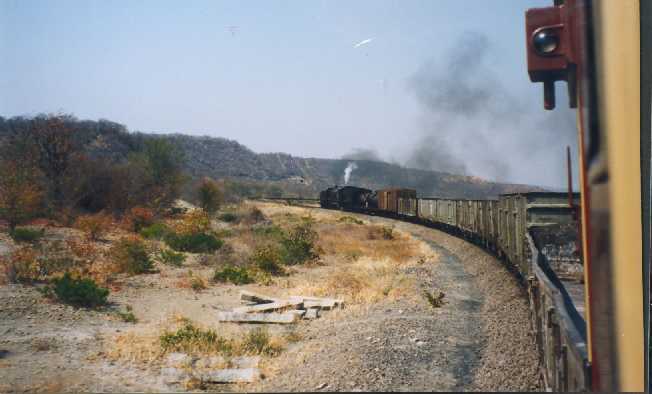 Having spent an extended period of time in Zimbabwe in 1993, it is
heart-breaking to hear the news of recent violence in this precious
country. I experienced nothing but warmth and generosity whilst
travelling here, with no outward signs of animosity and distance
because of my colour. It is true that the stamp of colonial Rhodesia
is still very much evident in the upper echelons of society, from
the cool white-washed terraces of the Victoria Falls Hotel to the
leather-bound seats and mahogany interiors of the first class trains.
However, modern Zimbabwe is redefining itself and
during my visit this was progressing apace and without the violence
that has marred this country's recent history.
Having spent an extended period of time in Zimbabwe in 1993, it is
heart-breaking to hear the news of recent violence in this precious
country. I experienced nothing but warmth and generosity whilst
travelling here, with no outward signs of animosity and distance
because of my colour. It is true that the stamp of colonial Rhodesia
is still very much evident in the upper echelons of society, from
the cool white-washed terraces of the Victoria Falls Hotel to the
leather-bound seats and mahogany interiors of the first class trains.
However, modern Zimbabwe is redefining itself and
during my visit this was progressing apace and without the violence
that has marred this country's recent history.
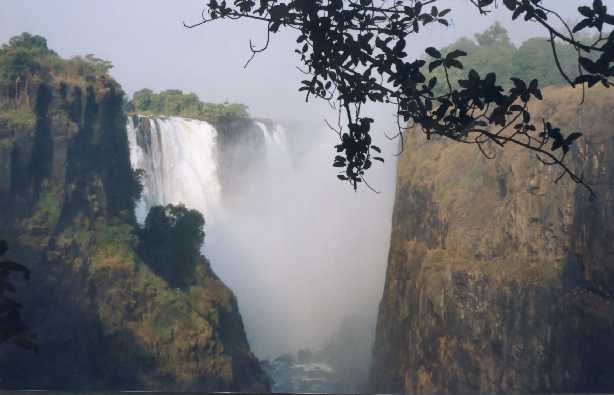 Victoria Falls is one of Zimbabwe's main drawcards, and rightly so.
In the local tongue, Vic Falls (as she is known to her friends) is
called 'The Smoke That Thunders', because from many miles around the
cascades are identified by the plumes of spray and distant roar that
spills into the sky. It is possible to see the falls from many
points of view, thanks to the flourishing tourist industry around the
town. Rent a bike or stroll through the woodlands on the brink of the
gorge, raft the grade 5 rapids of the Zambezi, fly by plane or
microlite or even bungy jump off the canyon bridge that connects with
Zambia. Despite the tourist attention, Vic Falls is a must-see and
has not yet fallen foul of the kind of development that seizes
Niagara. There are no barriers or binoculars, just the raw beauty
and power of the mighty falls.
Victoria Falls is one of Zimbabwe's main drawcards, and rightly so.
In the local tongue, Vic Falls (as she is known to her friends) is
called 'The Smoke That Thunders', because from many miles around the
cascades are identified by the plumes of spray and distant roar that
spills into the sky. It is possible to see the falls from many
points of view, thanks to the flourishing tourist industry around the
town. Rent a bike or stroll through the woodlands on the brink of the
gorge, raft the grade 5 rapids of the Zambezi, fly by plane or
microlite or even bungy jump off the canyon bridge that connects with
Zambia. Despite the tourist attention, Vic Falls is a must-see and
has not yet fallen foul of the kind of development that seizes
Niagara. There are no barriers or binoculars, just the raw beauty
and power of the mighty falls.
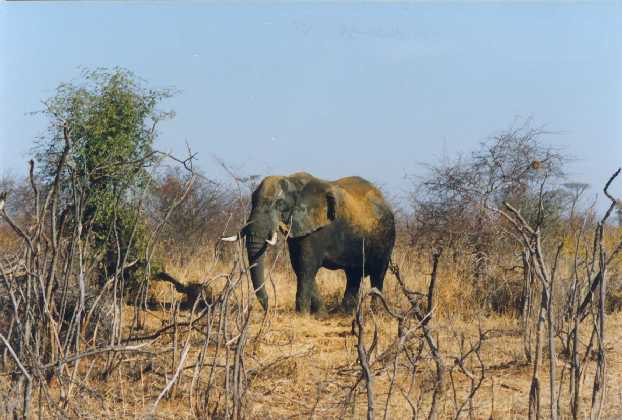 Another watery highlight of Zimbabwe is Lake Kariba. I was lucky
enough to be picked up and adopted by a family heading up from
Harare for a long weekend on the far side lake, at Tashinga camp.
In their own little speed boat we zipped along the southern shore
and set up camp in style ... this is one family who had camping down
to a fine art - right down to the sundowner gin and tonics!! During
the days, we took the boat out to go fishing or game watching,
particulary pleasant at night when elephant herds would come
to drink at sunset. The evenings buzzed with the sound of a
cicadia orchestra, and our camp fire illuminated the shining eyes
of bushbabies in the trees. One the first night, I awoke to hear
a rustling in the camp, I looked around (I was sleeping only under
a mosquito net hung from a branch) and in the moonlight I saw a
large bull elephant wandering into our camp. Gingerly, he picked
his way through and finally decided that mine looked like a particularly
tasty tree, and duly started his midnight snack. With this large
paciderm only 5 metres away from my bed, I kept absolutely still,
watching, fascinated. The following morning, I awoke to find footprints
all around my mosquito net where the nocturnal visitor had carefully
avoided the sleeping human.
Another watery highlight of Zimbabwe is Lake Kariba. I was lucky
enough to be picked up and adopted by a family heading up from
Harare for a long weekend on the far side lake, at Tashinga camp.
In their own little speed boat we zipped along the southern shore
and set up camp in style ... this is one family who had camping down
to a fine art - right down to the sundowner gin and tonics!! During
the days, we took the boat out to go fishing or game watching,
particulary pleasant at night when elephant herds would come
to drink at sunset. The evenings buzzed with the sound of a
cicadia orchestra, and our camp fire illuminated the shining eyes
of bushbabies in the trees. One the first night, I awoke to hear
a rustling in the camp, I looked around (I was sleeping only under
a mosquito net hung from a branch) and in the moonlight I saw a
large bull elephant wandering into our camp. Gingerly, he picked
his way through and finally decided that mine looked like a particularly
tasty tree, and duly started his midnight snack. With this large
paciderm only 5 metres away from my bed, I kept absolutely still,
watching, fascinated. The following morning, I awoke to find footprints
all around my mosquito net where the nocturnal visitor had carefully
avoided the sleeping human.
Other Zimbabwe highlights include the Eastern Highlands (which look
more like Scotland than Africa), the ruins of Great Zimbabwe
and the Matapos Hills near Bulawayo.
Namibia
Click here for a map of Namibia, courtesy of Lonely Planet.
Only in very recent years has Namibia become a tourist destination,
and now it is a popular spot for those who want to escape the the
well-trod safari trails of Kenya and Tanzania. When I visited in
1993, I had trouble booking a flight because the travel agent had
no idea where the country was, let alone what its capital city was!
Despite the lack of tourists at that time, Namibia was still easy
to travel in, having benefitted from the infrastructure and economy
provided by S. Africa. However, I used little of the public transport
and guest houses and ended up hitching most of the country and then
staying with (and even working for) the people who picked me up.
I ended up visiting desert schools with the Gideons, coaching
hockey in a city high school, juggling a kindergarten class of 30
and working as a vet's assistance in Otjiwarongo
(apparently no experience required!) which is an interesting job in Africa!
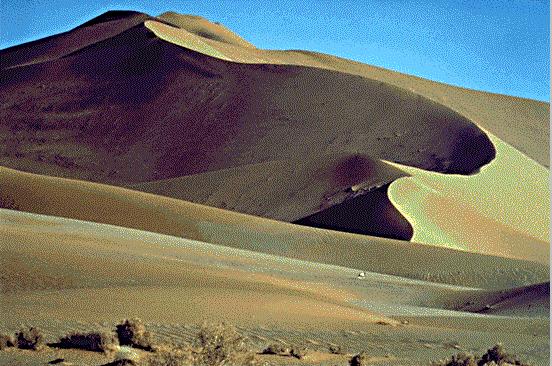 I spent a total of 6 weeks in Namibia and saw many different regions
and peoples. However, two of my favourite places were Etosha and
the Namib desert. The Etosha Pan, in the north of the country,
is a huge saline desert with surprisingly varied scenery, both
expanses of parched, cracked mud flats and shady water-holes surrounded
by acacia groves. I hitched into and around the park from a campsite
at Okaukuejo and was lucky enough to see large amounts of game,
including elephant, giraffe, zebra, buffalo, lion, impala and
oryx. In contrast, the Namib desert contains very little game,
but supports a surprisingly large amount of life. Due to the
sea mists that roll in from the skeleton coast, a variety of flora
including the quiver tree, acacia, desert eidelweiss and the
famous Welwitschia can survive. This latter marvel exists only in the Namib
desert and can reach ages of Methusalan propotions, with tattered
fronds sprawling across the desert floor. The desert contains many
gems such as this, also rich mineral deposits such as beautiful
rose quartz, and of course the giant dunes of Sosesvlei.
I spent a total of 6 weeks in Namibia and saw many different regions
and peoples. However, two of my favourite places were Etosha and
the Namib desert. The Etosha Pan, in the north of the country,
is a huge saline desert with surprisingly varied scenery, both
expanses of parched, cracked mud flats and shady water-holes surrounded
by acacia groves. I hitched into and around the park from a campsite
at Okaukuejo and was lucky enough to see large amounts of game,
including elephant, giraffe, zebra, buffalo, lion, impala and
oryx. In contrast, the Namib desert contains very little game,
but supports a surprisingly large amount of life. Due to the
sea mists that roll in from the skeleton coast, a variety of flora
including the quiver tree, acacia, desert eidelweiss and the
famous Welwitschia can survive. This latter marvel exists only in the Namib
desert and can reach ages of Methusalan propotions, with tattered
fronds sprawling across the desert floor. The desert contains many
gems such as this, also rich mineral deposits such as beautiful
rose quartz, and of course the giant dunes of Sosesvlei.
South Africa
Click here for a map of South Africa, courtesy of Lonely Planet.
One of the most interesting ways to cross S. Africa is to follow the `Garden
Route' between Cape Town and Johannesburg. Leaving the breezy
beaches of Cape Town on a cool April morning, Table Mountain was still
blanketed with cloud clinging to its plateau and draping its upper
slopes. We drove first inland past acres of vineyards and whitewashed
houses that belonged more in Tuscany than Africa, but then ducked back to
the coast to follow the ocean east. Small coves with blanched beaches
are tucked like children's secrets between rocky cliffs and and grassy
slopes. If you're lucky, you can see the occasional pod of dolphins
break the surface of the water. After a day of ocean, flora and the
popular beach resorts of Mossel Bay and Pletenberg Bay, the route takes
you inland again, and the road starts to climb.
The greenery begins to thin and the scenery becomes more rocky and
arid. The main trade up here seems to be ostrich farming and
around the town of Oudtshorn there are several ranches which breed
these cantankerous birds for everything from feathers, eggs and
meat, right down to using their feet as lamp stands! Further north,
you hit the real desert and at the end of a long drive through the
karoo, in which the parched plains extend to every horizon, the
glittering skyscrapers of Johannesburg creep into view.
Egypt
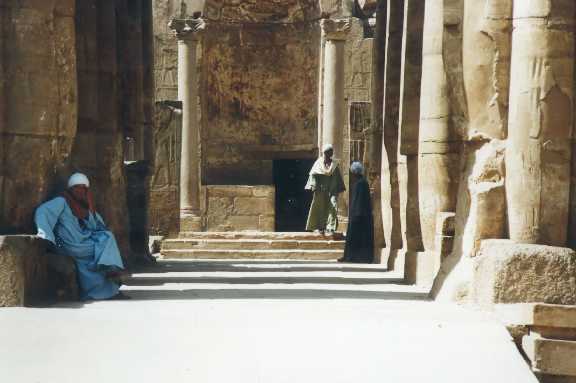
 The standard route through Egypt is to follow the Nile south from
Cairo through Luxor and Aswan. This journey takes in the contrasts
of Cairo where busy streets meet ancient monuments, the Necropolis
at Thebes and other temples of Luxor and Abu Simbul which represents
an amazing feat of engineering both thousands of years BC and this
century. These cities are usually heavily touristed and the
attention attracted from the locals (especially if you're a blonde
female!) who are constantly trying to sell trinkets, perfume and
guide services, gets a little waring. But it is worth it.
The standard route through Egypt is to follow the Nile south from
Cairo through Luxor and Aswan. This journey takes in the contrasts
of Cairo where busy streets meet ancient monuments, the Necropolis
at Thebes and other temples of Luxor and Abu Simbul which represents
an amazing feat of engineering both thousands of years BC and this
century. These cities are usually heavily touristed and the
attention attracted from the locals (especially if you're a blonde
female!) who are constantly trying to sell trinkets, perfume and
guide services, gets a little waring. But it is worth it.
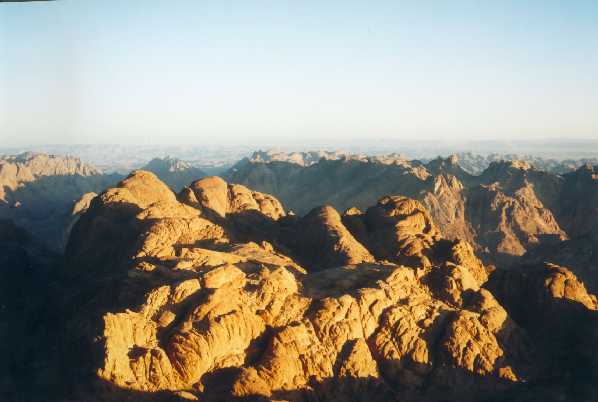 However, don't stop here! Escape the heat of the Nile valley and
head to the Sinai peninsula. Starting from St. Catherine's monastery
the climb up Mt Sinai takes around 3 hours, but is not hard if
you are in decent shape. The nights are cold, so take a good sleeping
bag and a crepuscular start will be rewarded by a stunning sunrise
over the extensive mountain ranges. If you are now exhausted by
the hiking and hassle of the trip so far, just head to the hippie
mecca of Dahab where you can lounge all day on the beach, smoking
a shisha, drinking exotic fruit cocktails and snorkelling over the
coral reefs.
However, don't stop here! Escape the heat of the Nile valley and
head to the Sinai peninsula. Starting from St. Catherine's monastery
the climb up Mt Sinai takes around 3 hours, but is not hard if
you are in decent shape. The nights are cold, so take a good sleeping
bag and a crepuscular start will be rewarded by a stunning sunrise
over the extensive mountain ranges. If you are now exhausted by
the hiking and hassle of the trip so far, just head to the hippie
mecca of Dahab where you can lounge all day on the beach, smoking
a shisha, drinking exotic fruit cocktails and snorkelling over the
coral reefs.
Morocco
 When you arrive in the city of Marrakech, the heady smells of incense,
snake charmers and narrow streets make you feel like you have
travelled back in time. The tourist centrepiece is the Djma el Fanaar
square where witchdoctors, musicians, holy men and street performers
fill every square metre of the paved plaza. The action really gets going
at night and this is a great place to feel the pulse of the city,
grab some falafal or a tajine and just soak up the ambience. One
of the most interesting experiences I had in Marrakech was a visit
to the Hamam, or bath house. These are not always easy to find,
since the best ones are really the domain of the locals. However,
I had been befriended by a local woman who took me along to enjoy
this fun mix of washing and socialising! In a large room filled by
clouds a steam, the women collect buckets of scalding water and
spend literally hours scubbing themselves down. This was quite
in contrast to my pagan showering rituals, so of course I was taken
in hand and ceremoniously scrubbed by the hands of others, which
removed at least my epidermis and probably several lower layers of
skin too! Apart from this, the most fun you can have in Marrakech
is by bravely plunging into the narrow back streets, crammed with
stalls that spill over with olives, baklava, figs and sacks of spices
and get thoroughly lost. You'll find yourself in a maze of alleyways,
beautifully tiled courtyards and markets. And there there is always
an abundance of small children willing to take you back to your hotel
for a bit of baksheesh!
When you arrive in the city of Marrakech, the heady smells of incense,
snake charmers and narrow streets make you feel like you have
travelled back in time. The tourist centrepiece is the Djma el Fanaar
square where witchdoctors, musicians, holy men and street performers
fill every square metre of the paved plaza. The action really gets going
at night and this is a great place to feel the pulse of the city,
grab some falafal or a tajine and just soak up the ambience. One
of the most interesting experiences I had in Marrakech was a visit
to the Hamam, or bath house. These are not always easy to find,
since the best ones are really the domain of the locals. However,
I had been befriended by a local woman who took me along to enjoy
this fun mix of washing and socialising! In a large room filled by
clouds a steam, the women collect buckets of scalding water and
spend literally hours scubbing themselves down. This was quite
in contrast to my pagan showering rituals, so of course I was taken
in hand and ceremoniously scrubbed by the hands of others, which
removed at least my epidermis and probably several lower layers of
skin too! Apart from this, the most fun you can have in Marrakech
is by bravely plunging into the narrow back streets, crammed with
stalls that spill over with olives, baklava, figs and sacks of spices
and get thoroughly lost. You'll find yourself in a maze of alleyways,
beautifully tiled courtyards and markets. And there there is always
an abundance of small children willing to take you back to your hotel
for a bit of baksheesh!
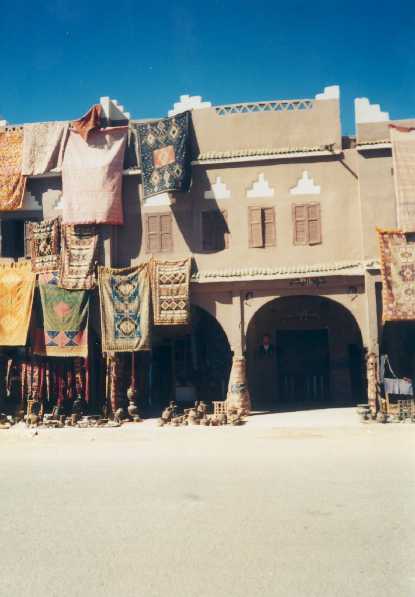 From Marrakech, I chose to travel south east to Ouzazate and the oasis
town of Zagora. Ouzazate is one of the main centres for carpet
making and it is inevitable that you will be enticed into carpet
shops and given the kilim hard sell. If you don't mind the sales
pitch, this is quite interesting, even if you don't want to buy.
The whole process of woo-ing the customer over a glass of mint tea
is quite fun to experience and you will see some beautiful carpets,
although you'll have to bargain hard against the experts! Apart
from shopping, Ouzazate is surrounded by gorgeous oases and kasbahs.
Lush groves of figs and olives, fields of shady date palms make
for pleasant strolls around an agrarian culture that stills uses
the same style of tools and methods as hundreds of years ago.
From here, the journey to Zagora is simply breathtaking. The mountain
road winds up through precipitous valleys and then down to hidden
palm groves. There are often women on the side of the road
transporting huge wicker baskets of dates on their heads, dressed in
long dark robes with strings of silver coins around their foreheads.
Near the oases, the remains of ancient mud kasbahs seem to come alive
in the late afternoon sunlight, glowing a deep red colour, like rubies
nestled in the mountains.
From Marrakech, I chose to travel south east to Ouzazate and the oasis
town of Zagora. Ouzazate is one of the main centres for carpet
making and it is inevitable that you will be enticed into carpet
shops and given the kilim hard sell. If you don't mind the sales
pitch, this is quite interesting, even if you don't want to buy.
The whole process of woo-ing the customer over a glass of mint tea
is quite fun to experience and you will see some beautiful carpets,
although you'll have to bargain hard against the experts! Apart
from shopping, Ouzazate is surrounded by gorgeous oases and kasbahs.
Lush groves of figs and olives, fields of shady date palms make
for pleasant strolls around an agrarian culture that stills uses
the same style of tools and methods as hundreds of years ago.
From here, the journey to Zagora is simply breathtaking. The mountain
road winds up through precipitous valleys and then down to hidden
palm groves. There are often women on the side of the road
transporting huge wicker baskets of dates on their heads, dressed in
long dark robes with strings of silver coins around their foreheads.
Near the oases, the remains of ancient mud kasbahs seem to come alive
in the late afternoon sunlight, glowing a deep red colour, like rubies
nestled in the mountains.
A train journey to the ancient cities of Fez and Meknes takes you
through some beautiful rural countryside and is a wonderful way
to meet people. Whole extended families pile into the trains,
which are usually very comfortable, laden with picnics and blankets
and will no doubt insist in involving you in their banquet.
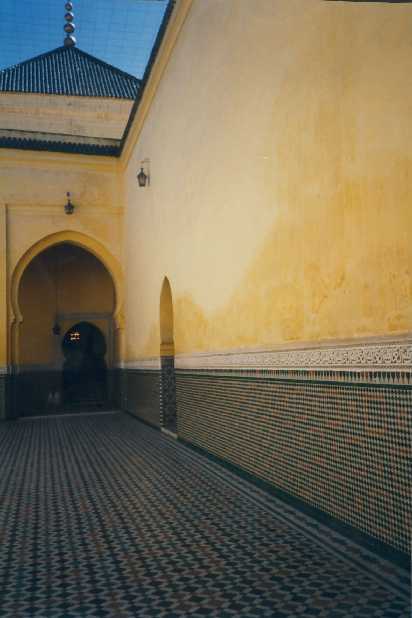
Fez and Meknes are architectural wonders with their intricately mosaiced
gateways in brilliant azure and turquoise, carved minarets
and golden domes. Several of these buildings have cool marble
courtyards with flowing fountains and leafy gardens. And of
course there are the extensive street bazaars that vend all sorts
of wares in leather, copper, silver and ceramics.